Heart Valve Surgery in Ahmedabad - Dr. Abhishek R. Parmar
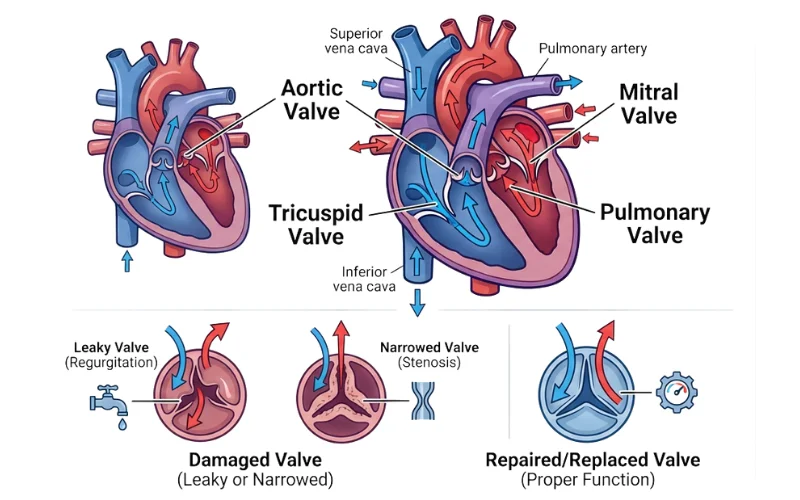
The heart’s four valves keep blood flowing in one direction. When a valve becomes narrowed (stenosis) or leaky (regurgitation), the heart has to work harder, leading to breathlessness, fatigue and — if untreated — heart failure. Heart valve surgery in Ahmedabad with Dr. Abhishek R. Parmar offers precise repair or replacement of the mitral, aortic and tricuspid valves, including minimally invasive options for suitable patients. With 20+ years of experience and 11,000+ cardiac, thoracic and vascular surgeries, Dr. Parmar focuses on restoring normal blood flow with the most durable, least invasive solution appropriate for each patient
What is Heart Valve Surgery?
Heart valve surgery is performed to repair or replace a valve that is no longer working properly. A diseased valve may be too narrow to let blood through easily (stenosis) or may not close fully, allowing blood to leak backwards (regurgitation). Both problems force the heart to work harder and, over time, can damage the heart muscle.
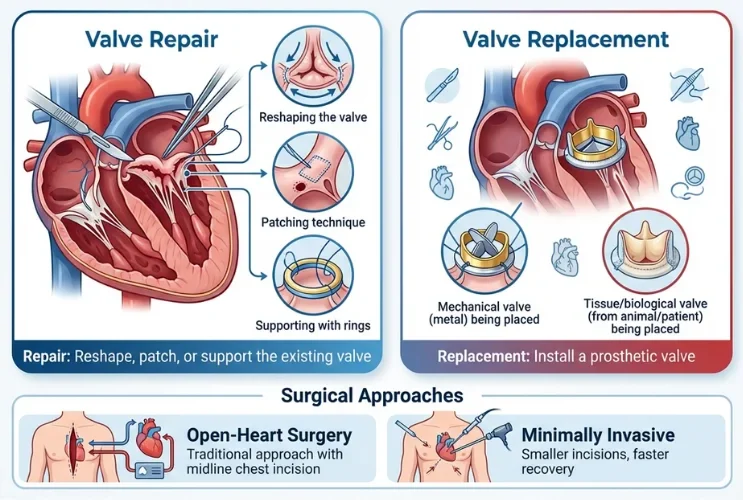
Depending on the valve affected and the nature of the damage, the surgeon will either repair the existing valve — preserving the patient’s own tissue — or replace it with a mechanical or tissue (biological) valve.
The aim of surgery is to restore normal one-way blood flow, relieve symptoms, protect the heart muscle and improve both quality of life and long-term survival.
Valve Repair vs Valve Replacement
Whenever it is safe and durable to do so, Dr. Parmar prefers valve repair over replacement. Repairing your own valve preserves natural heart function, avoids long-term blood-thinning medication in many cases, and reduces certain long-term risks. However, when a valve is too damaged to repair reliably, replacement with a mechanical or tissue valve gives an excellent, predictable result. The right choice depends on which valve is affected, the type of damage, your age and your lifestyle — all of which Dr. Parmar discusses with you in detail.
Types of Replacement Valves: Mechanical vs Tissue
|
Sr.
|
Factor
|
Mechanical Valve
|
Tissue (Biological) Valve
|
|---|---|---|---|
|
1
|
Material
|
Durable man-made materials
|
Made from animal or human tissue
|
|
2
|
Lifespan
|
Very long, often lifelong
|
Typically 10–20 years
|
|
3
|
Blood thinners
|
Lifelong required
|
Usually short-term only
|
|
4
|
Best suited for
|
Younger patients
|
Older patients or those who cannot take blood thinners
|
|
5
|
Re-operation
|
Rarely needed
|
May need replacement later
|
There is no single ‘best’ valve — the right choice is personal. Dr. Parmar helps each patient weigh durability against the need for blood-thinning medication, taking age, lifestyle, and personal preference into account.
Heart Valve Conditions We Treat
Mitral Valve Disease
The mitral valve controls blood flow between the left atrium and left ventricle. Mitral regurgitation (leakage) and mitral stenosis (narrowing, often from rheumatic heart disease, which remains common in India) are the main conditions treated. Where possible, mitral valve repair is preferred over replacement to preserve heart function.
Aortic Valve Disease
The aortic valve controls blood flow out of the heart to the body. Aortic stenosis (narrowing) and aortic regurgitation (leakage) commonly require valve replacement, and in selected patients this can be done through a minimally invasive incision.
Tricuspid Valve Disease
The tricuspid valve sits between the right atrium and right ventricle. Tricuspid problems often occur alongside mitral disease and may be repaired during the same operation to give a complete, lasting result.
Minimally Invasive Heart Valve Surgery
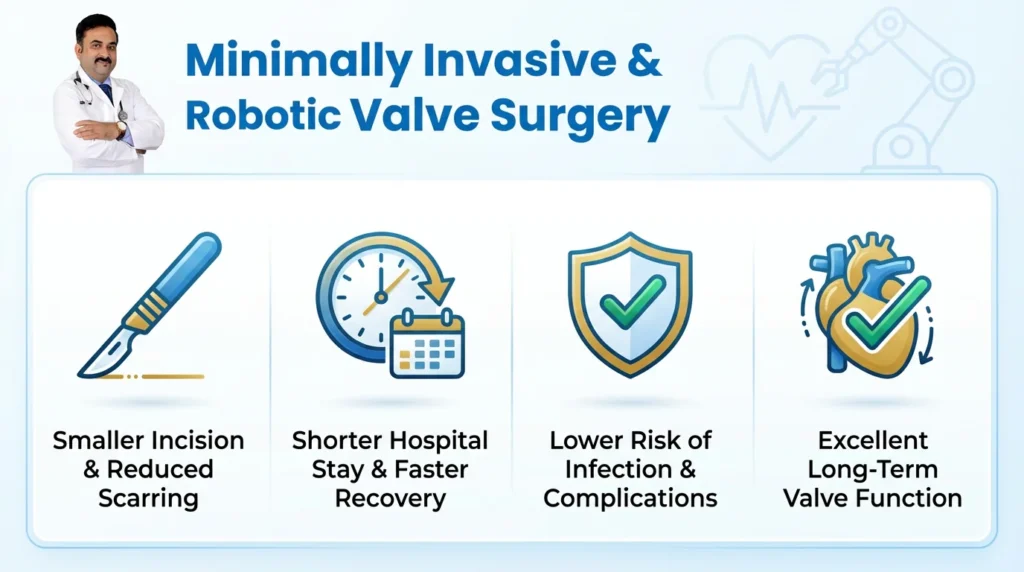
Dr. Parmar specialises in minimally invasive valve replacements for suitable candidates. Instead of dividing the breastbone, the valve is accessed through a small incision between the ribs. The benefits include less pain, smaller scars, reduced blood loss, a shorter hospital stay and a faster recovery — while achieving the same surgical result. Not every valve patient is a candidate, and Dr. Parmar will advise honestly on whether this approach is right and safe for you.
Signs You May Need Valve Surgery
- Breathlessness, especially on exertion or when lying flat
- Fatigue and reduced ability to exercise
- Swelling of the ankles or feet
- Palpitations or an irregular heartbeat
- Chest discomfort
- Dizziness or fainting
- A heart murmur detected by your doctor

- If you have been diagnosed with valve disease or experience these symptoms, an early evaluation allows surgery to be planned at the safest time — before the heart muscle is permanently affected.
Your Treatment Journey: Step by Step

Recovery & Outcomes
Most patients are walking within a day or two and leave hospital within about a week (sooner after minimally invasive surgery). Light activity resumes in 3–4 weeks and full activity in 6–12 weeks. Patients with a mechanical valve take lifelong blood-thinning medication with regular monitoring; those with a tissue valve usually need it only briefly. With timely surgery and good follow-up, valve operations have excellent long-term outcomes, relieving symptoms and protecting the heart for years to come.
Know the Cost-
Cost of Heart Valve Surgery in Ahmedabad
The cost of heart valve surgery in Ahmedabad depends on the valve(s) involved, whether the valve is repaired or replaced, the type of replacement valve chosen (mechanical or tissue), whether the approach is conventional or minimally invasive, room category, length of stay and insurance coverage. Most major insurers and corporate panels are accepted at HCG Hospitals, with cashless approval usually within 24–48 hours. A detailed, personalised estimate is provided after consultation once the surgical plan is finalised.
Why Choose Dr. Abhishek Parmar for Heart Valve Surgery?
Dr. Abhishek Parmar is trusted by thousands of patients for his calm guidance, clear communication, and genuine concern for their well-being. He blends advanced surgical expertise with a human touch, helping patients feel confident and cared for at every step of their heart-health journey.
- 20+ years of experience and 11,000+ cardiac, thoracic & vascular surgeries
- Specialist in minimally invasive valve replacements
- Preference for valve repair over replacement wherever safe and durable
- Experienced in complex and combined valve procedures (e.g. valve + bypass)
- HCG Hospitals’ advanced cardiac OT and dedicated CTVS ICU
- HCG Hospitals’ advanced cardiac OT and dedicated CTVS ICU
- Full support for outstation and international patients
Frequently Asked Questions about CABG

20+ years of experience
11,000+ successful cardiac, thoracic, and vascular surgeries
20+ years of experience
11,000+ successful cardiac, thoracic, and vascular surgeries
Q. Is valve repair better than valve replacement?
When a valve can be reliably repaired, repair is usually preferred — it preserves your own tissue, often avoids lifelong blood thinners and maintains better heart function. When a valve is too damaged, replacement gives an excellent, predictable result. Dr. Parmar advises based on your specific valve and condition.
Q. Which is better - a mechanical or a tissue valve?
Neither is universally better. Mechanical valves last longer but require lifelong blood thinners; tissue valves usually avoid long-term blood thinners but may need replacing after 10–20 years. The right choice depends on your age, lifestyle and preferences.
Q. Can heart valve surgery be done minimally invasively?
Yes, in selected patients. Many mitral and aortic valve procedures can be performed through a small incision between the ribs, giving less pain and a faster recovery. Dr. Parmar will advise whether you are a candidate.
Q. How long does recovery take after valve surgery?
Most patients leave hospital within about a week (sooner after minimally invasive surgery), resume light activity in 3–4 weeks, and return to full activity in 6–12 weeks.
Q. Will I need blood thinners after valve surgery?
If you receive a mechanical valve, yes — lifelong, with regular monitoring. With a tissue valve or a valve repair, blood thinners are usually needed only for a short period or not at all.
Q. How do I know if I need valve surgery?
Symptoms such as breathlessness, fatigue, swelling, palpitations or fainting, along with an abnormal echocardiogram, may indicate the need for surgery. An evaluation with Dr. Parmar will determine whether and when surgery is advisable.
Related Treatments
Minimally Invasive Cardiac Surgery (MICS)
Coronary Artery Bypass Surgery (CABG)
Cardiovascular Surgery
Book Your Consultation
If you have valve disease or symptoms such as breathlessness or fatigue, book a consultation with Dr. Abhishek Parmar at HCG Hospitals, Ahmedabad. Outstation and international patients are welcome.