Total Arterial Bypass Surgery (Total Arterial CABG) in Ahmedabad - Dr. Abhishek R. Parmar
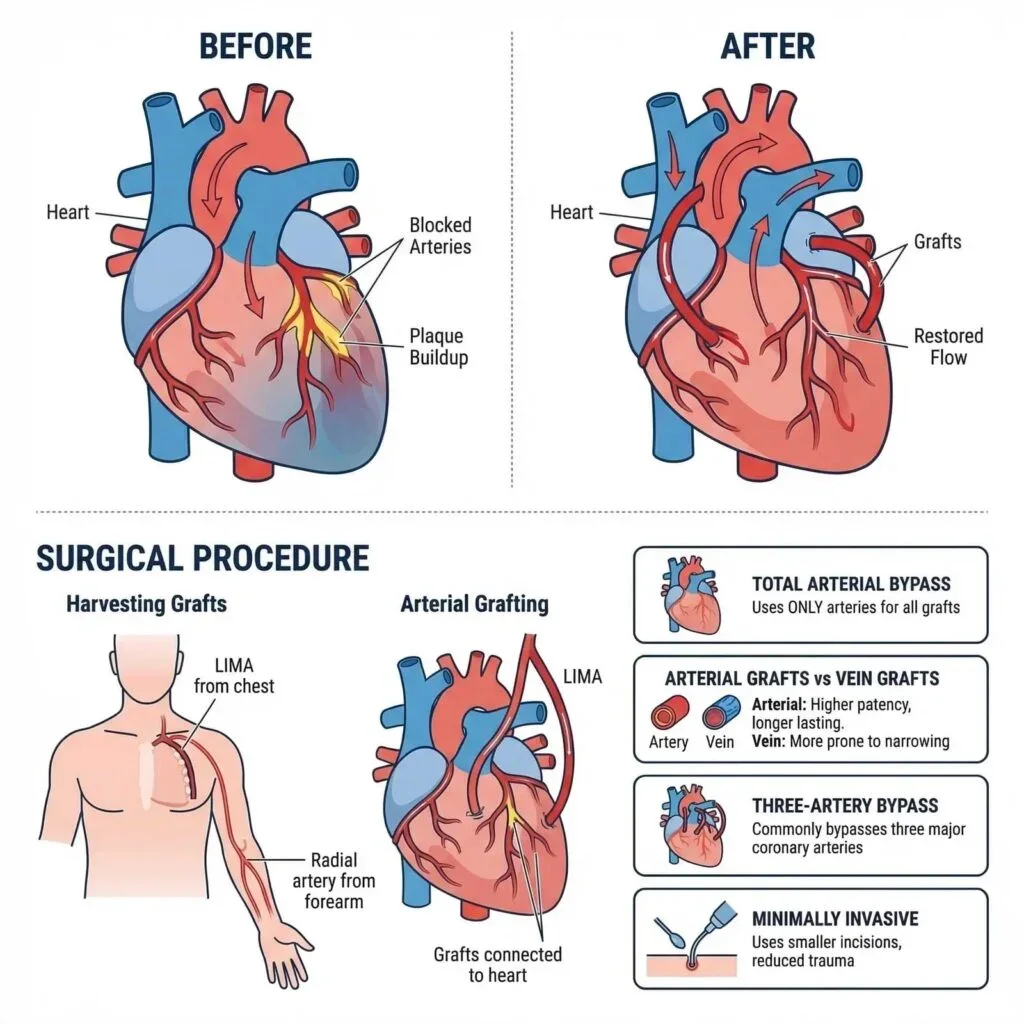
Total Arterial Bypass — also called Total Arterial CABG — is an advanced form of heart bypass surgery in which the surgeon uses only arteries (not leg veins) to bypass blocked coronary vessels. Because arterial grafts last far longer than vein grafts, this approach offers superior long-term durability, with many grafts remaining open for 20–25 years or more. Dr. Abhishek R. Parmar is among the few cardiac surgeons in Gujarat who routinely perform total arterial bypass in Ahmedabad, including the technically demanding LIMA-RIMA Y graft, drawing on 20+ years of experience and 11,000+ surgeries.
What is Total Arterial Bypass?
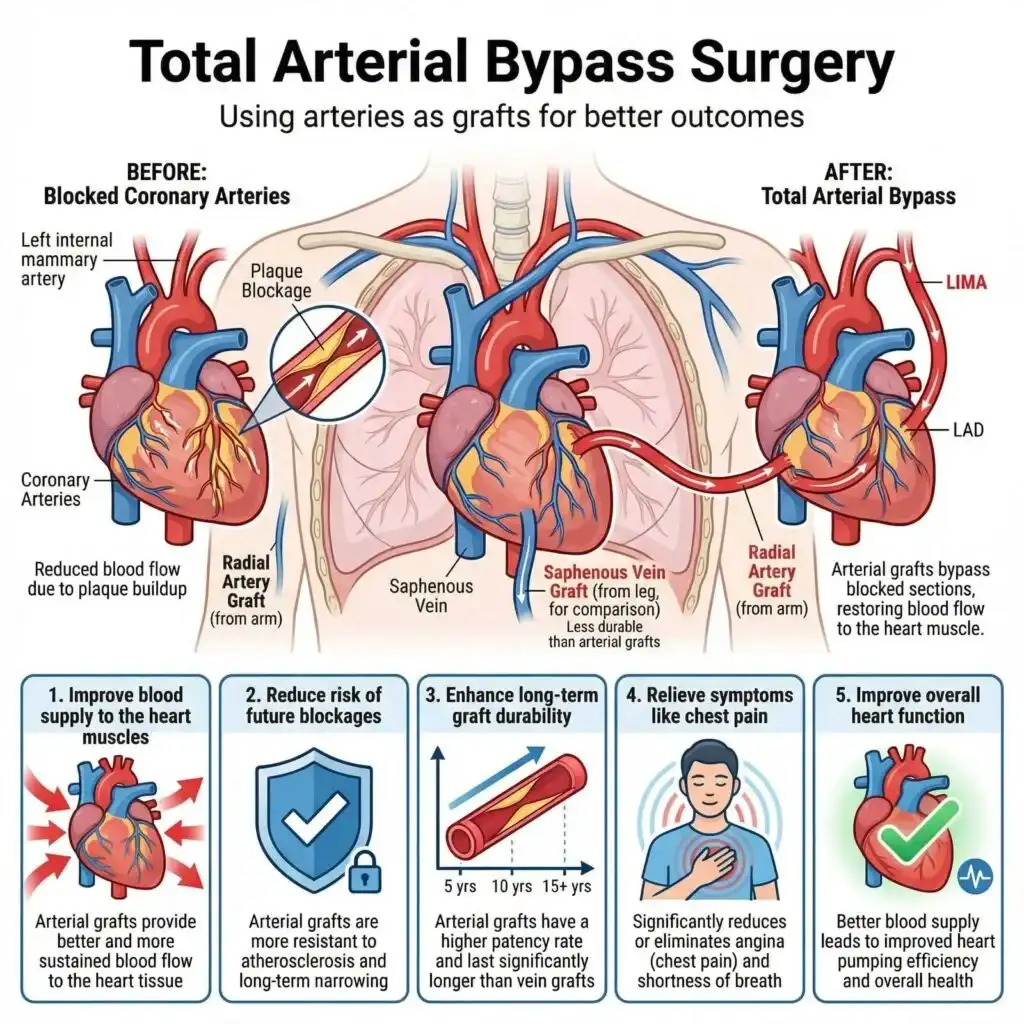
In conventional bypass surgery, a vein taken from the leg (the saphenous vein) is often used to carry blood around blocked coronary arteries. While effective, vein grafts tend to narrow and block over time — roughly half are blocked within 10–15 years. Total Arterial Bypass avoids this problem by using only arterial grafts, which are biologically suited to high-pressure arterial blood flow and stay open for far longer.
This is the same operation as standard CABG in terms of restoring blood flow to the heart, but the choice of graft material makes a major difference to how long the benefits last. For the right patient, total arterial revascularisation is widely regarded as the gold standard for long-term outcomes.
Arterial Grafts vs Vein Grafts: Why It Matters
|
Sr.
|
Factor
|
Arterial Grafts (LIMA / RIMA / Radial)
|
Vein Grafts (Saphenous Vein)
|
|---|---|---|---|
|
1
|
Source
|
Arteries from chest wall / forearm
|
Vein from the leg
|
|
2
|
Suited to arterial pressure
|
Yes — naturally
|
Less so
|
|
3
|
10-year patency
|
Very high (LIMA ~90–95%)
|
Around 50–60%
|
|
4
|
20-year durability
|
Excellent
|
Often blocked
|
|
5
|
Best for
|
Long-term durability, younger patients
|
Additional grafts when needed
|
Using arterial grafts requires greater surgical skill and longer operating time, which is why total arterial bypass is performed by a smaller number of experienced surgeons. The reward is a more durable result that can spare patients from repeat procedures later in life.
Arteries Used in Total Arterial CABG
LIMA (Left Internal Mammary Artery)
The LIMA, taken from inside the left chest wall, is the single most reliable graft in all of cardiac surgery, with outstanding 20-year patency. It is almost always used to bypass the most important coronary artery (the LAD).
RIMA (Right Internal Mammary Artery)
The RIMA, from the right chest wall, provides a second high-quality arterial graft. Using both internal mammary arteries (bilateral IMA) is a hallmark of true total arterial surgery and a particular area of Dr. Parmar’s expertise.
Radial Artery
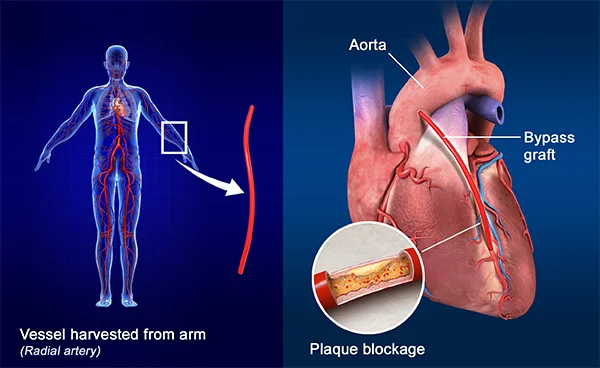
The radial artery from the forearm can be used as an additional arterial graft when more than two grafts are needed, completing an all-arterial revascularisation.

The LIMA-RIMA Y Graft Technique
In the LIMA-RIMA Y graft technique, the RIMA is joined to the LIMA to form a ‘Y’ shape. This allows both internal mammary arteries to supply multiple coronary territories from a single inflow source — an elegant, durable configuration that maximises the use of the body’s best graft material. It is one of the most technically advanced bypass techniques and requires a surgeon with specific training and high case experience. Dr. Parmar performs LIMA-RIMA Y grafting for suitable patients seeking the most durable possible bypass result.
Who Benefits Most from Total Arterial Bypass?
- Younger patients who will live for many decades after surgery and benefit most from durable grafts
- Patients who want to minimise the chance of needing a repeat bypass in future
- Diabetic patients, who often have more aggressive coronary disease
- Patients with suitable arterial anatomy (assessed before surgery)
- Anyone seeking the gold standard, long-lasting bypass result

- Not every patient is a candidate — factors such as overall health, urgency, and the condition of the arteries matter. Dr. Parmar assesses each case individually and recommends total arterial bypass only when it is safe and beneficial.

Long-Term Outcomes & Graft Survival
The strength of total arterial bypass is durability. The LIMA graft has a 20-year patency of roughly 90%, and additional arterial grafts also outlast vein grafts substantially. For patients, this translates into a lower long-term risk of recurrent angina, fewer repeat procedures, and excellent quality of life for decades after surgery. Combined with good medication, a heart-healthy lifestyle and regular follow-up, total arterial revascularisation offers among the best long-term results in coronary surgery.
Your Bypass Journey: Step by Step
Recovery After Total Arterial CABG
Recovery is broadly similar to standard bypass surgery: walking within a day or two, discharge in about 5–7 days, light activity in 4–6 weeks and full activity in 8–12 weeks. Cardiac rehabilitation is strongly recommended. The key difference with total arterial bypass is not the recovery time but the long-term durability — the benefit is measured in the decades that follow.
Why Choose Dr. Abhishek Parmar for Total Arterial CABG?
Dr. Abhishek Parmar is trusted by thousands of patients for his calm guidance, clear communication, and genuine concern for their well-being. He blends advanced surgical expertise with a human touch, helping patients feel confident and cared for at every step of their heart-health journey.
- One of the few surgeons in Gujarat performing routine total arterial CABG
- Expertise in the advanced LIMA-RIMA Y graft technique
- 20+ years of experience and 11,000+ cardiac, thoracic & vascular surgeries
- Focus on long-term durability and minimising future re-operations
- HCG Hospitals’ advanced cardiac OT and dedicated CTVS ICU
- Honest assessment of whether total arterial bypass is right for you
Frequently Asked Questions about CABG

20+ years of experience
11,000+ successful cardiac, thoracic, and vascular surgeries
20+ years of experience
11,000+ successful cardiac, thoracic, and vascular surgeries
Q. What is the difference between total arterial bypass and normal bypass?
In normal bypass, surgeons often use a leg vein for some grafts. In total arterial bypass, only arteries (LIMA, RIMA, radial) are used. Arterial grafts last far longer, giving better long-term durability — though the surgery is more technically demanding.
Q. Is total arterial CABG better?
For suitable patients, especially younger ones, total arterial bypass offers superior long-term graft survival and a lower chance of needing repeat surgery. It is widely regarded as the gold standard, but the right approach depends on the individual.
Q. What is a LIMA-RIMA Y graft?
It is an advanced configuration where the right internal mammary artery (RIMA) is joined to the left (LIMA) in a Y shape, allowing both arteries to supply multiple coronary territories from a single inflow. It is one of the most durable bypass techniques.
Q. How long do arterial grafts last?
The LIMA graft has about a 90% patency at 20 years — far longer than vein grafts, of which roughly half are blocked by 10–15 years.
Q. Is the recovery longer than normal bypass?
Recovery time is broadly similar to standard bypass surgery. The main advantage of total arterial bypass is long-term durability rather than a different recovery period.
Q. Am I a candidate for total arterial bypass?
Candidacy depends on your age, overall health, the urgency of surgery and your arterial anatomy. Dr. Parmar assesses each patient individually and recommends it only when it is safe and beneficial.
Related Treatments
Coronary Artery Bypass Surgery (CABG)
Cardiovascular Surgery
Minimally Invasive Cardiac Surgery (MICS)
Book Your Consultation
If you have been advised to undergo bypass surgery and want to understand whether total arterial CABG is right for you, book a consultation with Dr. Abhishek Parmar at HCG Hospitals, Ahmedabad. Outstation and international patients are welcome.