Vascular Surgery in Ahmedabad - Dr. Abhishek R. Parmar
Your blood vessels the arteries and veins that carry blood throughout the body can develop blockages, weaknesses or clots that threaten your limbs and your life. Vascular surgery in Ahmedabad with Dr. Abhishek R. Parmar offers expert surgical and minimally invasive (endovascular) treatment for conditions such as peripheral artery disease, varicose veins, aneurysms, deep vein thrombosis, diabetic foot and dialysis access. With 20+ years of experience and 11,000+ surgeries, Dr. Parmar restores healthy blood flow, relieves pain and helps patients keep their limbs and quality of life.
What is Vascular Surgery?
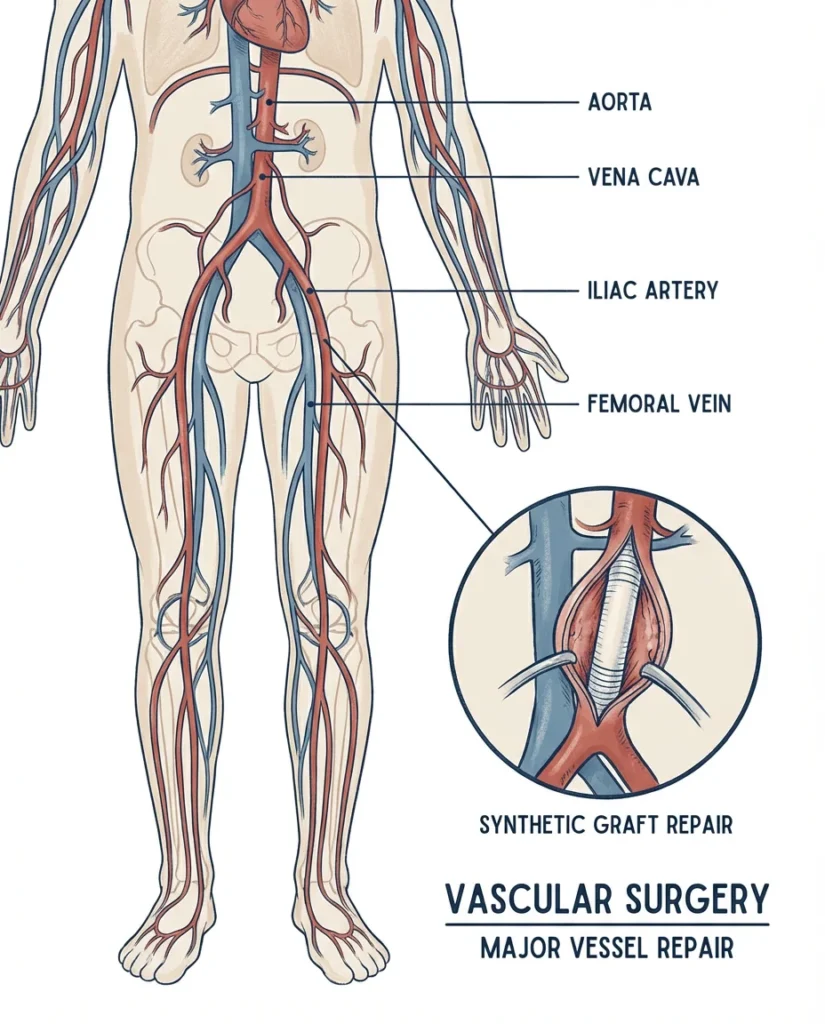
Vascular surgery is the medical speciality that treats diseases of the arteries and veins (the blood vessels) anywhere in the body except the heart and brain. This includes the large arteries in the abdomen, the vessels in the legs and arms, the neck arteries that supply the brain, and the veins that return blood to the heart.
Vascular conditions can develop slowly such as the narrowing of leg arteries that causes pain on walking or suddenly and dangerously, such as a blood clot or a bursting aneurysm. Dr. Parmar treats vascular disease using both traditional open surgery and modern minimally invasive endovascular techniques (working from inside the blood vessel through a small puncture), choosing the safest, most effective option for each patient.
Vascular Conditions We Treat
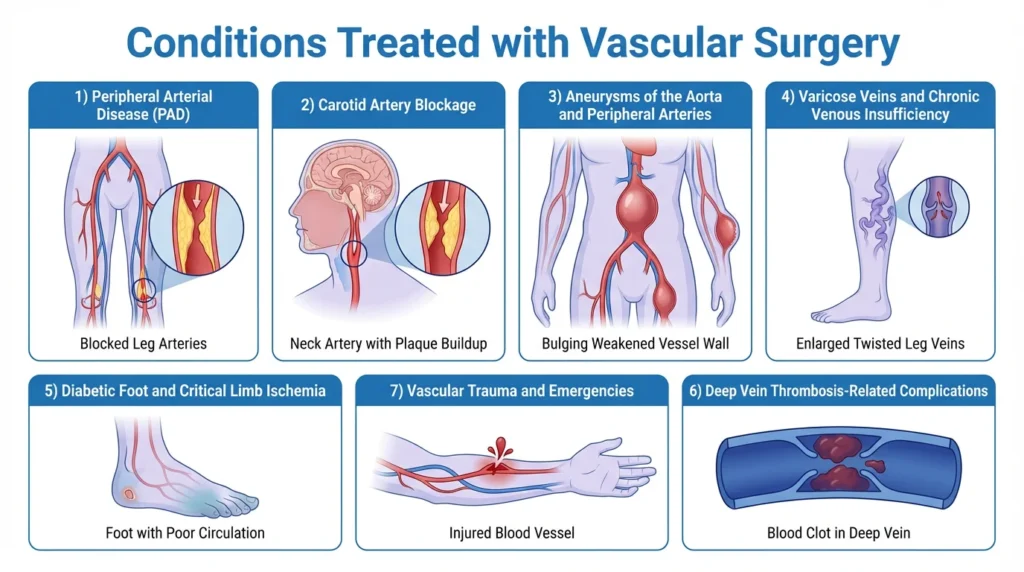
Peripheral Artery Disease (PAD)
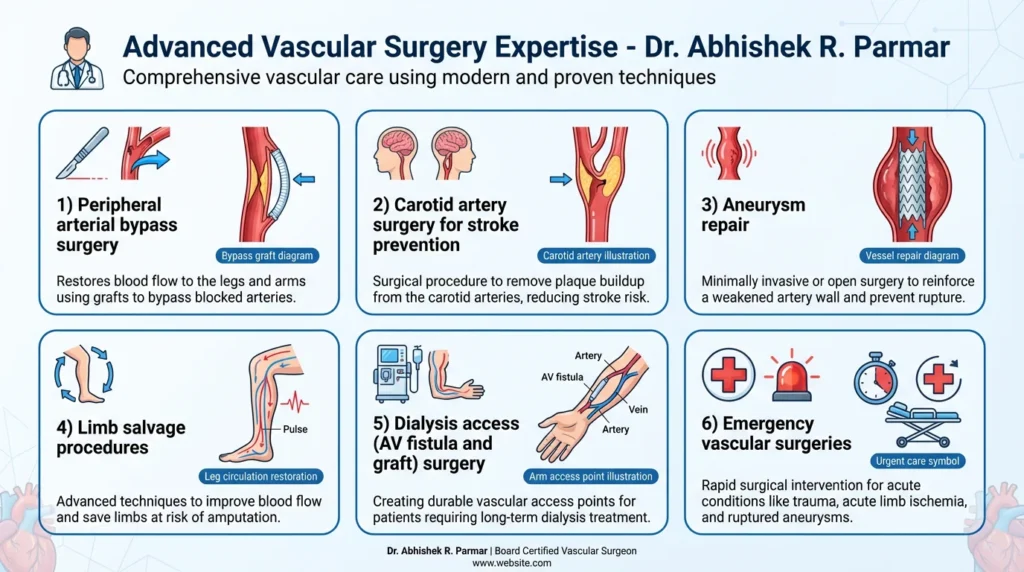
Narrowing of the arteries in the legs, causing pain or cramping on walking (claudication), cold feet, slow-healing wounds and, if severe, the risk of limb loss. Treated with bypass surgery, angioplasty or stenting to restore blood flow.
Varicose Veins
Swollen, twisted veins in the legs that cause aching, heaviness, swelling and skin changes. Treated with modern, minimally invasive options as well as surgery, improving both symptoms and appearance.
Aneurysms (Aortic & Peripheral)
A weakened, bulging section of an artery that can rupture if untreated. Aortic and peripheral aneurysms are repaired with open surgery or minimally invasive stent grafts, depending on the location and anatomy.
Deep Vein Thrombosis (DVT)
A blood clot in a deep vein, usually in the leg, which causes swelling and pain and can be dangerous if it travels to the lungs. Managed with medication and, in selected cases, procedures to remove or dissolve the clot.
Diabetic Foot & Limb Salvage
Diabetes can damage both nerves and arteries in the feet, leading to non-healing ulcers and infection. Restoring blood flow through vascular procedures is often key to saving the limb and avoiding amputation.
AV Fistula for Dialysis
Patients with kidney failure who need dialysis require reliable vascular access. Dr. Parmar creates and maintains arteriovenous (AV) fistulas, the gold-standard access for long-term haemodialysis.
Carotid Artery Disease
Narrowing of the neck arteries that supply the brain, which raises the risk of stroke. Treated surgically (carotid endarterectomy) or with stenting in suitable patients.
Vascular Treatments & Procedures Offered
- Peripheral bypass surgery to restore leg blood flow
- Angioplasty and stenting (endovascular) for blocked arteries
- Open and endovascular aneurysm repair (including stent grafts)
- Varicose vein treatment
- AV fistula creation and revision for dialysis
- Carotid artery surgery to reduce stroke risk
- Limb salvage procedures for diabetic and critical limb ischaemia
Open Surgery vs Endovascular (Minimally Invasive) Treatment
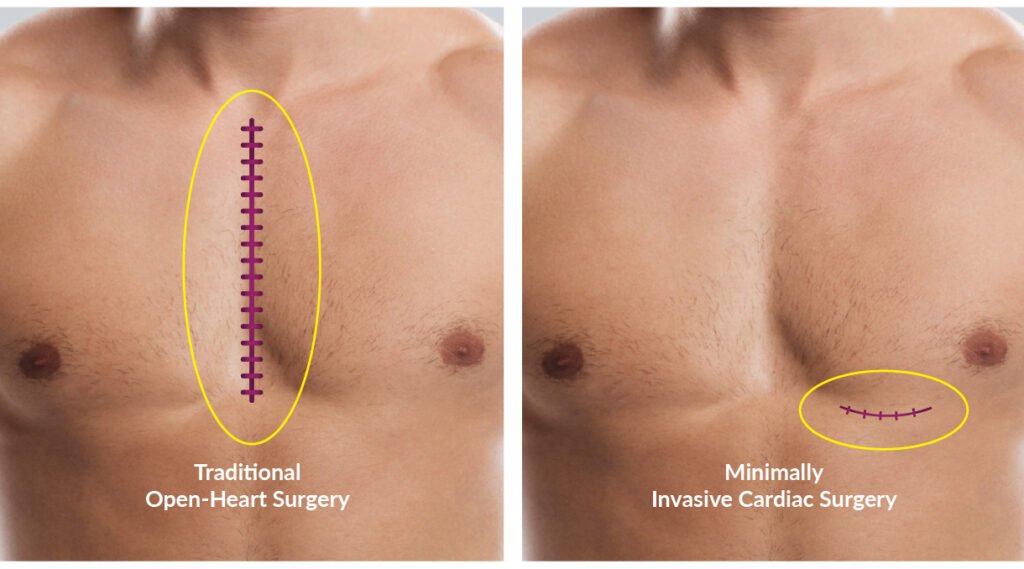
Many vascular conditions can now be treated using endovascular techniques — working from inside the blood vessel through a small puncture, often guided by X-ray imaging. This means smaller incisions, less pain and faster recovery. However, open surgery remains the best option for certain blockages, aneurysms and complex cases. Dr. Parmar is experienced in both and recommends the approach that offers you the safest, most durable result.
Signs You Should See a Vascular Surgeon
- Leg pain or cramping when walking that eases with rest (claudication)
- Cold, pale or discoloured feet or toes
- Wounds or ulcers on the legs or feet that won’t heal
- Swollen, painful, twisted veins (varicose veins)
- Sudden leg swelling, pain or warmth (possible DVT)
- A known aneurysm or a pulsating lump in the abdomen
- Need for dialysis access (AV fistula)

- Vascular disease often worsens silently. Early assessment can prevent serious complications such as limb loss or stroke — if you have any of these signs, seek an evaluation promptly.
Your Treatment Journey
Recovery & Outcomes After Surgery
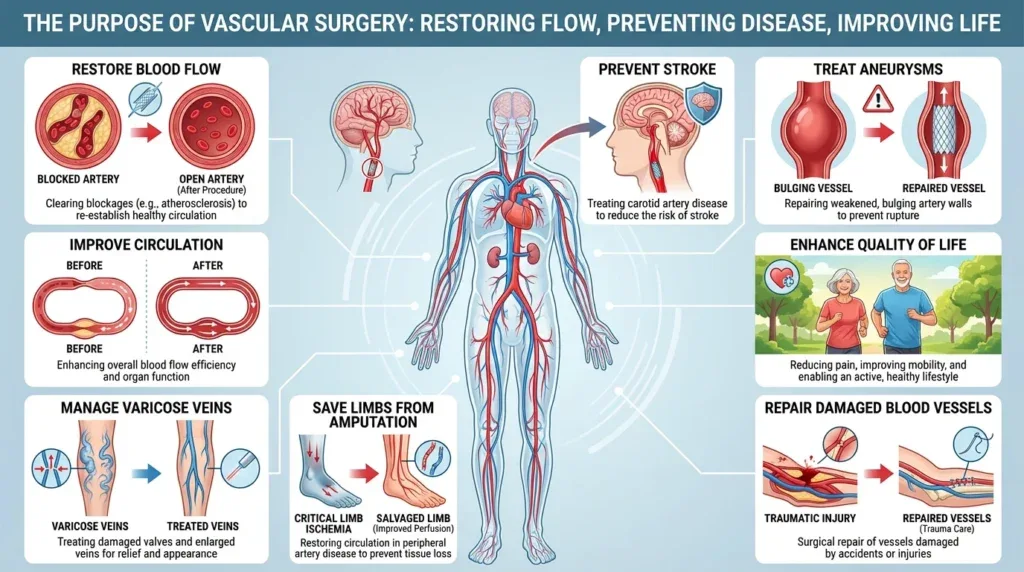
Recovery depends on the procedure. Minimally invasive endovascular treatments often allow discharge within a day or two with minimal downtime, while open vascular surgery requires a longer recovery. Across all vascular procedures, the goals are the same: relieve symptoms, restore blood flow, prevent complications such as stroke or limb loss, and protect long-term health. Controlling blood pressure, diabetes and cholesterol, plus quitting smoking, are essential to keep the treated vessels healthy.
Why Choose Dr. Abhishek Parmar for Vascular Surgery?
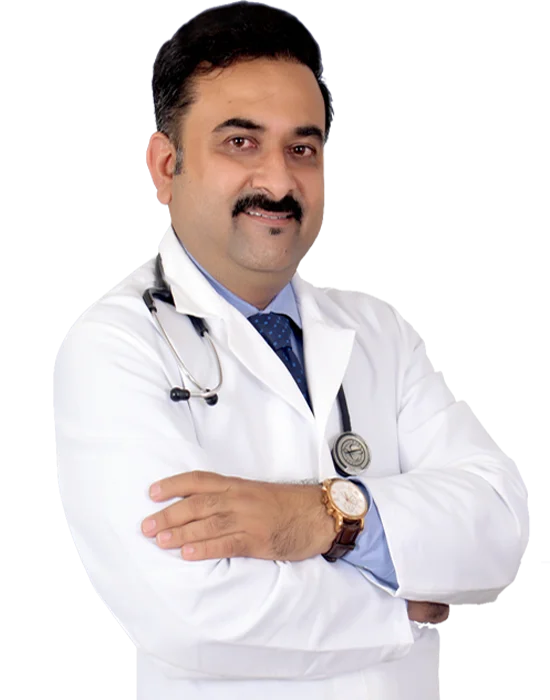
Dr. Abhishek Parmar is trusted by thousands of patients for his calm guidance, clear communication, and genuine concern for their well-being. He blends advanced surgical expertise with a human touch, helping patients feel confident and cared for at every step of their heart-health journey.
- 20+ years of experience and 11,000+ cardiac, thoracic & vascular surgeries
- Expertise across the full range of vascular conditions arterial, venous and dialysis access
- Skilled in both open vascular surgery and minimally invasive endovascular techniques
- Focus on limb salvage for diabetic and critical limb ischaemia patients
- HCG Hospitals’ advanced facilities and experienced team
- Honest, patient-first guidance on the best treatment option
Frequently Asked Questions about Vascular Surgery
20+ years of experience
11,000+ successful cardiac, thoracic, and vascular surgeries
20+ years of experience
11,000+ successful cardiac, thoracic, and vascular surgeries
Q. What does a vascular surgeon treat?
A vascular surgeon treats diseases of the arteries and veins outside the heart and brain — including peripheral artery disease, varicose veins, aneurysms, deep vein thrombosis, diabetic foot, carotid (neck) artery disease and dialysis access.
Q. Do all vascular problems need surgery?
No. Many vascular conditions can be managed with medication, lifestyle changes or minimally invasive procedures. Surgery is recommended only when it offers the best outcome. Dr. Parmar will explain all suitable options.
Q. What is the treatment for varicose veins?
Varicose veins can be treated with lifestyle measures, compression and modern minimally invasive procedures, as well as surgery in some cases. Treatment relieves aching, swelling and skin changes and improves appearance.
Q. Can leg artery blockages be treated without major surgery?
Often yes — angioplasty and stenting can open blocked leg arteries through a small puncture (endovascular treatment). Severe or complex blockages may need bypass surgery. The right approach depends on your specific case.
Q. What is an AV fistula?
An arteriovenous (AV) fistula is a surgical connection between an artery and a vein, usually in the arm, that creates reliable access for long-term dialysis. It is considered the gold-standard dialysis access.
Q. How do I know if I have a dangerous aneurysm?
Many aneurysms cause no symptoms and are found on a scan. A pulsating lump in the abdomen, or sudden severe pain, can signal a serious problem. If you have a known aneurysm or these symptoms, seek urgent evaluation.
Related Treatments
Cardiovascular Surgery
Coronary Artery Bypass Surgery (CABG)
Thoracic Surgery
Book Your Consultation
If you have leg pain, varicose veins, a non-healing wound, an aneurysm or need dialysis access, book a consultation with Dr. Abhishek Parmar at HCG Hospitals, Ahmedabad. Outstation and international patients are welcome.