Cardiovascular Surgery in Ahmedabad
Cardiovascular Surgery in Ahmedabad by Dr. Abhishek R. Parmar
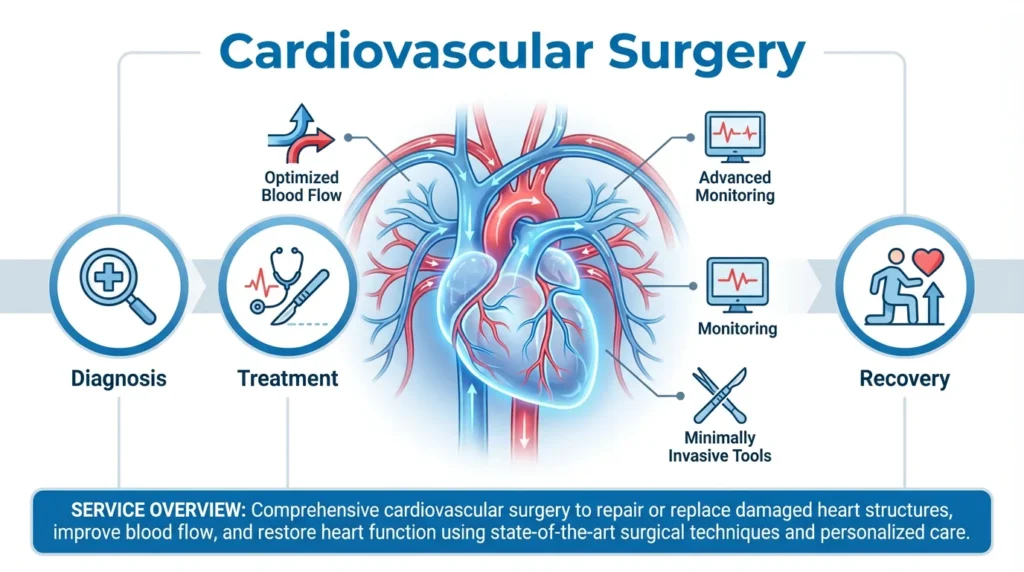
Cardiovascular surgery covers the full range of operations on the heart and major blood vessels — from coronary bypass and valve surgery to aortic and congenital procedures. As a senior cardiothoracic and vascular surgeon at HCG Hospitals, Ahmedabad, Dr. Abhishek R. Parmar offers comprehensive cardiovascular surgery in Ahmedabad backed by 20+ years of experience and 11,000+ successful surgeries. Whether your condition calls for traditional open-heart surgery or an advanced minimally invasive approach, the goal is always the same: the safest, most durable outcome for your heart.
What is Cardiovascular Surgery?
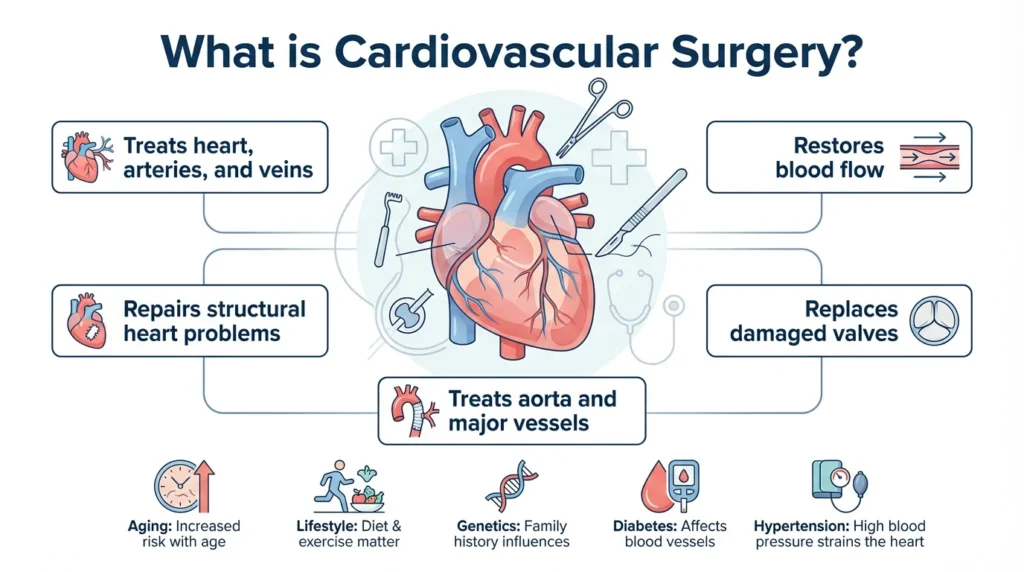
Cardiovascular surgery (also called cardiac surgery or CVTS cardiovascular and thoracic surgery) is the surgical treatment of diseases of the heart and the great blood vessels. It includes operations to restore blood flow to the heart, repair or replace damaged valves, correct structural defects present from birth, treat aneurysms and aortic disease, and manage the consequences of heart attacks. A cardiovascular surgeon works closely with cardiologists, who diagnose heart disease and perform non-surgical procedures such as angioplasty. When medication or stenting is not enough for example, with multiple blockages, severe valve disease or an aneurysm surgery offers a definitive, long-lasting solution. Dr. Parmar performs both open and closed (minimally invasive) cardiovascular procedures, selecting the approach that is safest and most effective for each patient.
Cardiovascular Surgery Procedures We Offer
Each procedure below has its own detailed page — link each H3 to the corresponding service page (this makes the page a strong internal-linking hub):
Coronary Artery Bypass Surgery (CABG)
Restoring blood flow around blocked coronary arteries using grafts, including off-pump and total arterial techniques. Learn more about CABG in Ahmedabad.
Heart Valve Surgery
Repair or replacement of the mitral, aortic and tricuspid valves, including minimally invasive options.
Total Arterial Bypass
All-artery bypass using LIMA, RIMA and radial grafts for superior long-term durability.
Minimally Invasive Cardiac Surgery (MICS)
Selected bypass, valve and ASD procedures through small incisions, with faster recovery.
Aortic & Aortic Root Surgery
Surgical treatment of thoracic aortic aneurysms and aortic root disease to prevent life-threatening rupture or dissection.
L.V. Aneurysm Surgery
Repair of left ventricular aneurysms that form after a heart attack, restoring heart shape and function.
ASD & Adult Congenital Surgery
Closure of atrial septal defects and correction of other congenital heart conditions in adults and selected children.
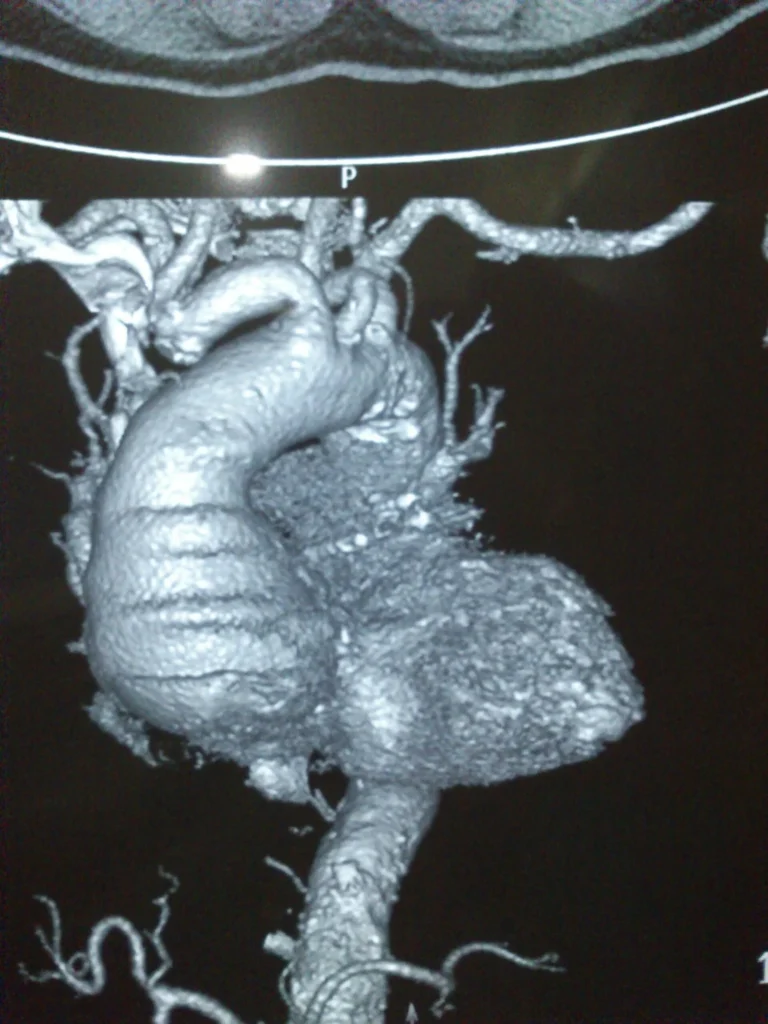
Conditions Treated by Cardiovascular Surgery
- Coronary artery disease (blocked heart arteries)
- Heart valve disease — stenosis and regurgitation
- Aortic aneurysm and aortic root disease
- Left ventricular aneurysm after heart attack
- Atrial septal defect (ASD) and other congenital defects
- Combined conditions (e.g. valve disease with coronary disease)
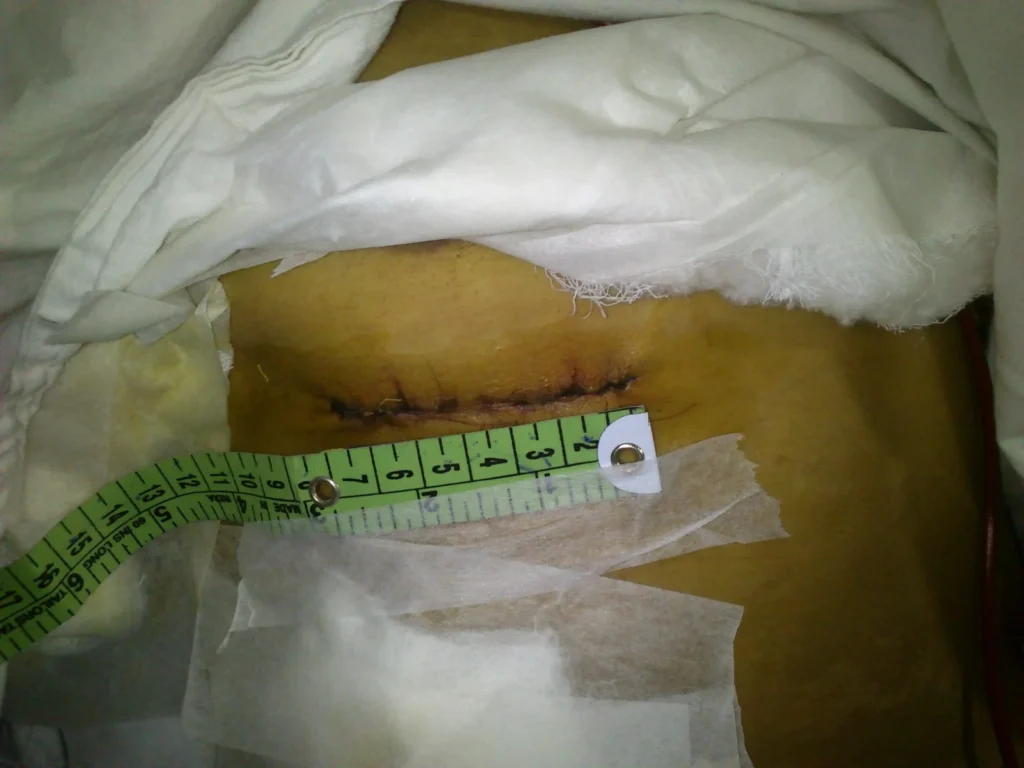
Open Heart Surgery vs Minimally Invasive Approaches
Traditional open-heart surgery accesses the heart by dividing the breastbone, giving the surgeon full control — the preferred approach for complex or multiple problems. Minimally invasive cardiovascular surgery uses small incisions between the ribs for selected procedures, offering less pain and a faster recovery. Neither approach is universally ‘better’; the right choice depends entirely on your specific condition. Dr. Parmar is experienced in both and recommends whichever offers you the safest outcome.
When is Cardiovascular Surgery Needed?
Cardiovascular surgery is typically recommended when:
- Multiple coronary arteries are severely blocked, or the left main artery is narrowed
- A heart valve is too damaged to manage with medication
- An aortic aneurysm reaches a size that risks rupture
- Medication and stenting have not controlled symptoms
- A structural defect (such as ASD) is affecting heart function
- A heart attack has caused a left ventricular aneurysm

- Warning signs that warrant evaluation include chest pain, breathlessness, fatigue, palpitations, swelling of the legs and fainting. Early assessment allows surgery to be planned at the safest possible time.
Your Treatment Journey
Why choose Dr. Abhishek Parmar for cardiovascular surgery?
Dr. Abhishek Parmar is trusted by thousands of patients for his calm guidance, clear communication, and genuine concern for their well-being. He blends advanced surgical expertise with a human touch, helping patients feel confident and cared for at every step of their heart-health journey.
- 20+ years of experience and 11,000+ cardiac, thoracic & vascular surgeries
- Full spectrum of cardiovascular procedures — bypass, valve, aortic, congenital
- Expertise in both open-heart and minimally invasive techniques
- Specialist in total arterial CABG and minimally invasive valve surgery
- HCG Hospitals’ advanced cardiac OT and dedicated CTVS ICU
- Patient-first, evidence-based approach with clear communication
Frequently Asked Questions About Cardiovascular Surgery
20+ years of experience
11,000+ successful cardiac, thoracic, and vascular surgeries
20+ years of experience
11,000+ successful cardiac, thoracic, and vascular surgeries
Q. What is the difference between a cardiologist and a cardiovascular surgeon?
A cardiologist diagnoses heart disease and performs non-surgical treatments such as angioplasty and stenting. A cardiovascular surgeon performs operations on the heart and blood vessels, such as bypass and valve surgery. They work together, and patients are usually referred to a surgeon by a cardiologist.
Q. What conditions does cardiovascular surgery treat?
It treats coronary artery disease, heart valve disease, aortic aneurysms, left ventricular aneurysms, congenital defects such as ASD, and combinations of these conditions.
Q. Is open-heart surgery safe?
In experienced hands, modern cardiovascular surgery is very safe, with high success rates for elective procedures. Individual risk depends on age, heart function and other health conditions, which Dr. Parmar assesses carefully before surgery.
Q. Can heart surgery be done without opening the chest fully?
Yes — many procedures can now be performed minimally invasively through small incisions between the ribs, in suitable patients. Dr. Parmar will advise whether this approach is right for your condition.
Q. How do I choose the best cardiovascular surgeon in Ahmedabad?
Look for experience, surgical volume, the range of procedures offered, hospital infrastructure and clear, honest communication. Dr. Parmar brings 20+ years of experience and 11,000+ surgeries across the full range of cardiovascular procedures.
Q. How long is recovery after cardiovascular surgery?
Recovery varies by procedure. Most open-heart patients return to normal activity in 6–12 weeks; minimally invasive patients often recover faster. Cardiac rehabilitation supports a safe, full recovery.
Related Treatments
Cardiovascular Surgery
Minimally Invasive Cardiac Surgery (MICS)
Vascular Surgery
Book Your Consultation
For an expert opinion on any cardiovascular condition, book a consultation with Dr. Abhishek Parmar at HCG Hospitals, Ahmedabad. Outstation and international patients are welcome.