Can Heart Blockage Come Back After Treatment?
Introduction
Finishing angioplasty or bypass surgery usually brings a huge sense of relief, but many patients soon start wondering about something equally important, can heart blockage come back after treatment. According to Dr. Abhishek Parmar, a leading cardiac surgeon in Ahmedabad at HCG Hospital, the honest answer is yes, it can happen. But understanding why it happens, and more importantly, how to prevent it, is what really protects your heart in the long run.
Yes, Blockage Can Return
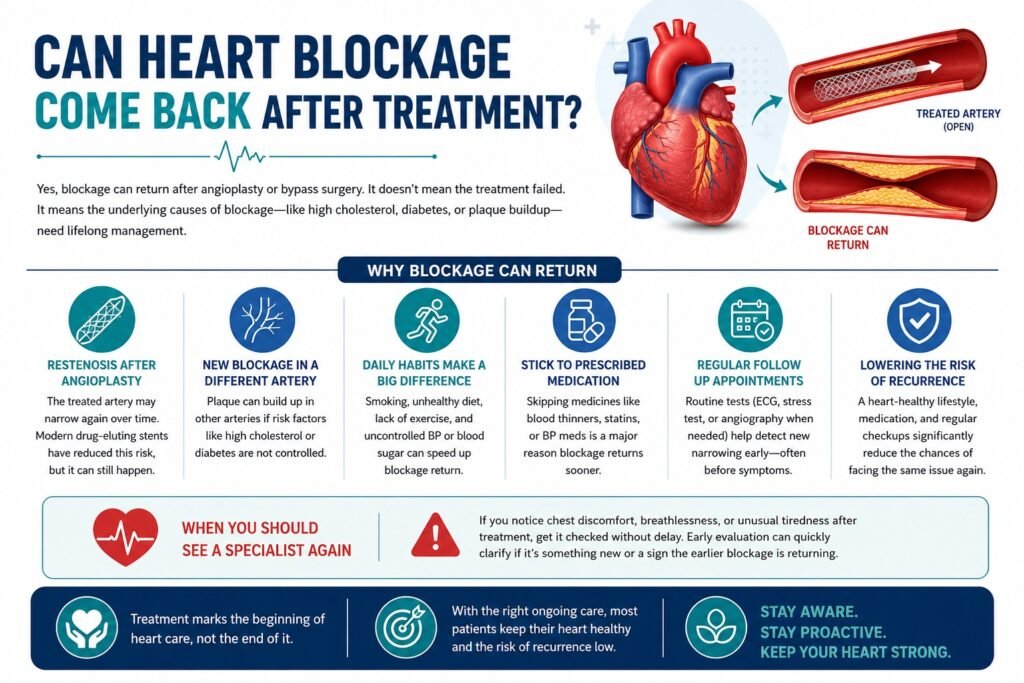
It is possible for heart blockage to return after treatment, whether the original procedure was angioplasty with a stent or open heart bypass surgery. This does not mean the treatment failed. It simply means that the underlying cause of the first blockage, such as high cholesterol or ongoing plaque buildup, is a condition that needs continuous management, not a one time fix.
Restenosis After Angioplasty
Patients who undergo angioplasty sometimes experience a condition called restenosis, where the treated artery gradually narrows again. This happens when the artery tissue reacts to the stent over time. According to Dr. Abhishek Parmar, a well known cardiac surgeon in Ahmedabad, modern drug eluting stents have lowered this risk considerably compared to older stent designs, though it remains something doctors continue to monitor closely.
A New Blockage in a Different Artery
What feels like a returning blockage is sometimes actually a fresh one forming elsewhere in the heart. Since conditions like high cholesterol and diabetes affect the entire cardiovascular system and not just one artery, other blood vessels can develop plaque buildup if the underlying risk factors are not kept under control.
Daily Habits Make a Bigger Difference Than People Expect
How a patient lives after treatment often matters just as much as the treatment itself. Continuing to smoke, eating food high in saturated fat, staying inactive, or letting blood sugar and blood pressure go unmanaged can all speed up the return of blockage. As Dr. Abhishek Parmar often tells patients at HCG Hospital, surgery solves the immediate problem, but daily habits decide the long term outcome.
Sticking to Prescribed Medication
After any heart procedure, doctors typically prescribe medications such as blood thinners, cholesterol lowering drugs, or blood pressure medication. Skipping doses or stopping these medicines early without medical guidance is one of the most common reasons blockage returns sooner than it should. Following the prescribed plan consistently gives the heart the best possible chance at staying clear.
Regular Follow Up Appointments
Even after a successful procedure, staying in touch with a heart specialist in Ahmedabad remains important. Routine tests such as an ECG, stress test, or repeat angiography when needed can catch any new narrowing early, often before symptoms appear, which makes treatment far simpler if it becomes necessary again.
Lowering the Risk of Recurrence
Blockage returning is a possibility, not a guarantee. Patients who commit to a heart healthy lifestyle, take their medication as prescribed, and keep up with regular follow up visits significantly reduce their chances of facing the same issue twice. Dr. Abhishek Parmar, a trusted cardiac surgeon in Ahmedabad, often reminds patients that treatment marks the beginning of heart care, not the end of it.
When You Should See a Specialist Again
If you have already been treated for a heart blockage and start noticing symptoms like chest discomfort, breathlessness, or unusual tiredness, do not wait to get it checked. A prompt consultation with a cardiac surgeon in Ahmedabad can quickly clarify whether it is something new or a sign that the earlier blockage is returning.
Heart blockage coming back is something worth being aware of, but it is far from inevitable. With the right ongoing care from an experienced cardiac surgeon in Ahmedabad like Dr. Abhishek Parmar at HCG Hospital, most patients go on to manage their heart health well and keep the risk of recurrence firmly under control.