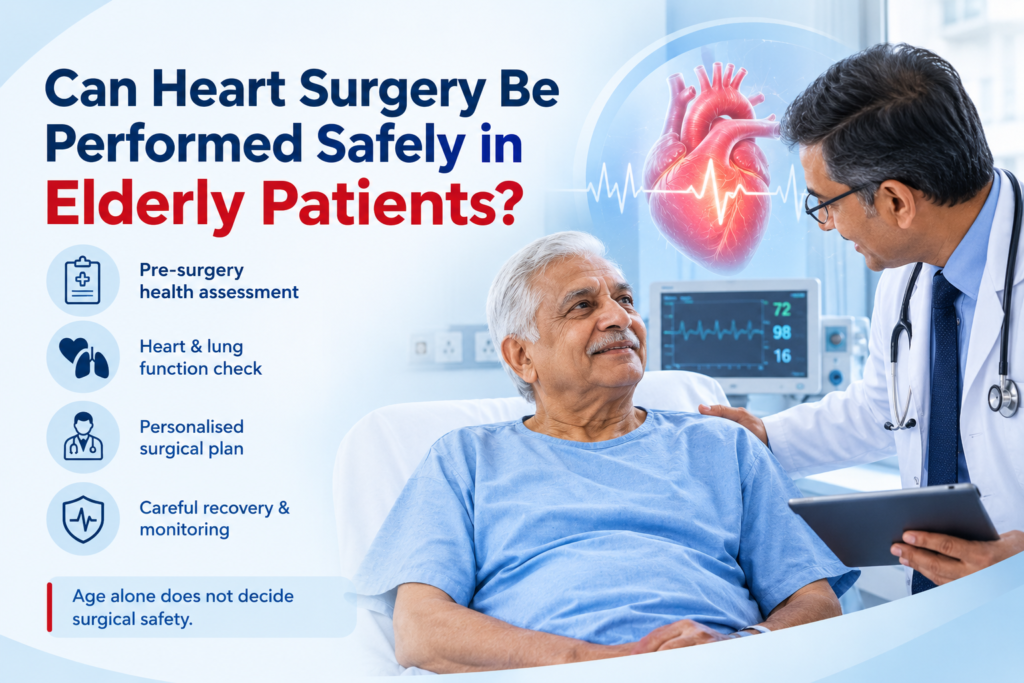
Can Heart Surgery Be Performed Safely in Elderly Patients?
Introduction
If your father or mother is in their seventies or eighties and a doctor has mentioned heart surgery, it’s natural to feel worried. Many people ask us the same thing: “Is it too late? Is it too risky at this age?” The honest answer is that age alone does not decide whether surgery is safe. Overall health, heart condition, and the quality of the surgical team matter far more. Let’s walk through what really counts.
Age Is a Number, Fitness Is the Real Measure
Two 75-year-olds can have very different health. One walks every morning, manages his own routine, and has no other serious illness. Another may have breathing trouble, weak kidneys, and poor mobility.
A good cardiac surgeon looks at the whole person, not just the birth date. That’s why a proper check-up before surgery is so important.
Why Heart Surgery May Be Needed in Later Life
As we grow older, the heart and its blood vessels naturally wear down. Common problems include:
- Blocked heart arteries: Fat and calcium build up inside the vessels, so the heart muscle receives less blood. This can cause chest pain or breathlessness.
- Tight or leaking heart valves: Valves work like small doors that keep blood flowing one way. When they harden or leak, the heart has to work much harder.
- Weak heart muscle: Over the years, the pumping power may drop, leading to tiredness and swollen feet.
Many elderly people have been living with these symptoms for a long time and assume it’s “just age.” Often, it’s treatable.
Is Surgery Riskier for Older Patients?
Yes, the risk can be somewhat higher than in younger patients, and an honest doctor will tell you that. But “higher” doesn’t mean “unsafe.” Surgical techniques, anaesthesia care, and post-operative monitoring have improved a lot over the years. Today, many older adults go through heart surgery well and return to a more comfortable daily life.
Surgery is also not the only thing that decides the outcome. The risk depends on:
- Other health conditions: Diabetes, high blood pressure, and kidney or lung problems need to be well controlled before surgery.
- Urgency: A planned surgery is generally safer than an emergency one, which is why timely consultation helps.
- Strength and nutrition: A person who is well-nourished and able to move around usually recovers faster.
- Experience of the team: The skill of the surgeon, anaesthetist, and ICU staff makes a real difference.
Heart Valve Surgery in the Elderly Adult
Heart valve surgery is one of the most common procedures in older patients. A damaged valve can be repaired, or replaced with a new one. In some cases, newer, less invasive methods may be an option, which can mean smaller cuts and a quicker recovery.
Which approach suits a patient depends on the valve involved, the heart’s condition, and overall fitness. A cardiac specialist will explain the options clearly so the family can decide together.
Our Take: Waiting Often Costs More Than Acting
From an analytical point of view, here is what we often see. Families delay the decision because of fear, and by the time the patient finally comes in, the heart is weaker and the surgery becomes more complicated.
Choosing a well-timed, planned procedure with proper preparation is often safer than waiting until symptoms become an emergency. Fear is understandable, but good information is a better guide.
How to Prepare Before Surgery
A little preparation goes a long way. Here are a few practical steps:
- Get a full heart evaluation. Tests like an ECG, echocardiogram, and blood tests help the doctor plan safely.
- Review all medicines. Carry every prescription to the consultation, including those for sugar and blood pressure.
- Stop smoking and tobacco. Even stopping a few weeks ahead helps the lungs recover better.
- Ask questions. Don’t hold back. Ask about risks, recovery time, and the other options.
- Plan family support. Someone should be available to help at home after discharge.
What Recovery Looks Like
Recovery takes patience, especially at an older age. In the hospital, the team watches closely during the first few days. After going home, most patients are advised to:
- Walk a little every day, increasing slowly
- Eat light, home-cooked, low-salt meals
- Take medicines on time
- Attend follow-up visits
- Avoid lifting heavy things until the doctor says it is fine
Emotional support matters too. Feeling low or tired for some time is common, and a caring family makes a big difference.
When Should You Consult a Doctor?
See a heart doctor without delay if an elderly family member has:
- Chest discomfort or heaviness
- Breathlessness on mild effort
- Dizziness or fainting
- Swollen ankles or unusual tiredness
If you’re looking for guidance in Ahmedabad, Dr Abhishek Parmar can assess the situation, explain whether surgery is needed, and talk you through the safest path forward.
Making the Right Decision for Your Loved One
Heart surgery in elderly patients can be done safely when the patient is carefully selected, well prepared, and treated by an experienced team. Age is just one piece of the puzzle. With the right evaluation and timely care, many seniors enjoy better energy, fewer symptoms, and more good years with their families.