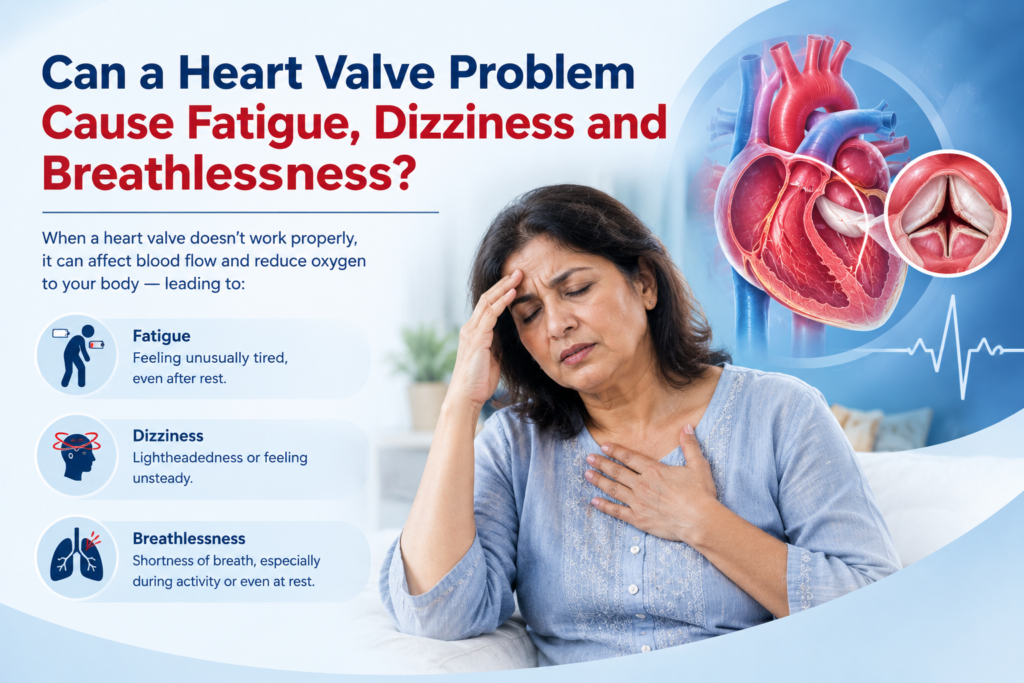
Can a Heart Valve Problem Cause Fatigue, Dizziness and Breathlessness?
Introduction
Feeling tired all the time, getting dizzy when you stand up, or running out of breath after a few stairs: most of us blame age, stress, or a busy routine. Many people live with these symptoms for months before getting them checked.
Sometimes, though, the real cause is a heart valve that isn’t working as it should. Let’s look at how that happens and what you can do about it.
What Do Heart Valves Actually Do?
Your heart has four valves. Think of them as small doors that open and close with every heartbeat, making sure blood moves in one direction only.
When a valve becomes stiff and narrow, the heart has to push harder to get blood through. When a valve leaks, some blood flows backwards, and the heart has to pump extra to make up for it. Either way, the heart slowly gets tired, and your body starts to feel it.
Why Valve Problems Cause These Symptoms
Each symptom has a simple explanation:
- Fatigue: When the heart can’t pump enough blood forward, muscles and organs receive less energy than they need. You feel drained, even after rest.
- Dizziness: A narrowed valve, especially the aortic valve, can limit blood reaching the brain. This may cause light-headedness, or even fainting in some cases.
- Breathlessness: When blood backs up behind a damaged valve, fluid can build up in the lungs. That makes breathing feel heavy, particularly while walking, climbing stairs, or lying flat.
Not everyone gets all three, and the symptoms often creep in so slowly that people simply adjust their lifestyle without realising something is wrong.
Other Signs Worth Noticing
Along with the three main symptoms, watch for these:
- Swollen ankles or feet, especially by evening
- Chest discomfort or tightness during activity
- Heart palpitations, a fluttering or racing feeling
- Waking up at night short of breath
- Reduced ability to walk the same distance as before
None of these automatically means a valve problem, but together they are a good reason to see a doctor.
What Causes Valve Problems?
Valves can be affected in several ways:
- Age-related wear: Over the years, valves can thicken or become calcified (hardened by calcium deposits).
- Rheumatic fever: An old throat infection in childhood can quietly damage valves, and the effects may show up decades later.
- Birth differences: Some people are born with a valve that is shaped differently.
- Infections and other heart conditions: These can also affect how valves open and close.
How Is It Diagnosed?
The process is simpler than most people expect. A cardiac specialist will usually listen to your heart for unusual sounds called murmurs, then suggest an echocardiogram. It is a painless ultrasound scan that shows how your valves move and how well your heart pumps. An ECG and a few blood tests may also be advised.
Our Take: Don't Normalise Your Symptoms
From an analytical point of view, the biggest gap we see isn’t in treatment. It’s in timing. People often wait until daily life becomes difficult before getting checked. By then, the heart may already be under strain.
Early detection gives you more options and more time to plan calmly. A simple scan today is far easier than an emergency visit later.
Treatment: Not Always Surgery
Many valve problems don’t need an operation right away. Treatment depends on how severe the problem is and how your heart is coping:
- Regular monitoring: Mild cases may only need periodic check-ups and scans.
- Medicines: These can ease symptoms, control heart rhythm, and reduce fluid build-up, though they do not repair the valve itself.
- Heart valve surgery: When a valve is badly damaged, it can be repaired or replaced. Your doctor will explain which option suits you, based on your age, overall health, and the valve involved.
Modern techniques, including less invasive approaches in suitable patients, have made recovery smoother than many people imagine.
Recovery takes patience, especially at an older age. In the hospital, the team watches closely during the first few days. After going home, most patients are advised to:
- Walk a little every day, increasing slowly
- Eat light, home-cooked, low-salt meals
- Take medicines on time
- Attend follow-up visits
- Avoid lifting heavy things until the doctor says it is fine
Emotional support matters too. Feeling low or tired for some time is common, and a caring family makes a big difference.
Simple Steps You Can Take Now
- Note when your symptoms appear and what makes them better or worse
- Carry all your previous reports and medicine lists to your appointment
- Keep your blood pressure and sugar under control
- Limit salt, avoid tobacco, and stay gently active as advised
- Don’t ignore a sore throat in children, as untreated infections can affect the heart later
When Should You See a Doctor?
Book a consultation without delay if you experience fainting, chest pain, sudden breathlessness, or fast-growing swelling in the legs. For ongoing tiredness or mild dizziness, a check-up within the next few days is a sensible step.
If you’re looking for guidance in Ahmedabad, Dr Abhishek Parmar can evaluate your symptoms, review your scans, and explain whether monitoring, medicines, or heart valve surgery is the right path for you.
Listen to What Your Heart Is Telling You
Fatigue, dizziness, and breathlessness are common complaints, and many have simple causes. But when they show up together or keep returning, a valve problem is worth ruling out. The good news is that valve conditions are very treatable when found at the right time. A quick check-up can bring clarity, comfort, and peace of mind for you and your family.