Coronary Artery Bypass Surgery (CABG) in Ahmedabad — Dr. Abhishek R. Parmar
Coronary Artery Bypass Grafting (CABG), commonly called heart bypass surgery, is one of the most reliable treatments for advanced coronary artery disease. At HCG Hospitals, Ahmedabad, Dr. Abhishek R. Parmar — a senior cardiothoracic and vascular surgeon with 20+ years of experience and 11,000+ successful heart surgeries — performs the full range of bypass procedures, including Total Arterial CABG, LIMA-RIMA Y grafting and off-pump (beating-heart) bypass. Whether you need single-vessel or complex multi-vessel surgery, the goal is the same: durable long-term blood flow, reduced cardiac risk and a faster return to a full, active life.
What is Coronary Artery Bypass Surgery (CABG)?
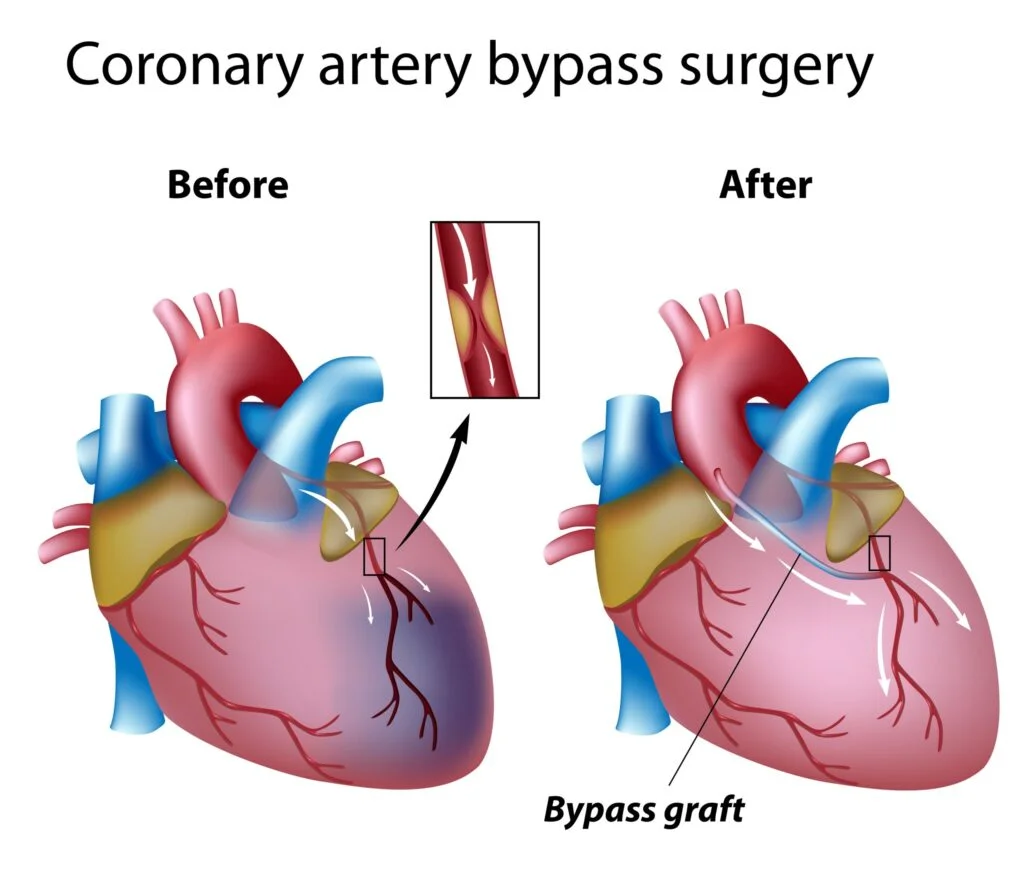
CABG is a surgical procedure that restores healthy blood flow to the heart when the coronary arteries become narrowed or blocked by cholesterol plaques (atherosclerosis). The surgeon takes a healthy blood vessel from elsewhere in the body — typically the internal mammary artery (LIMA or RIMA) from inside the chest wall, the radial artery from the forearm, or the saphenous vein from the leg — and uses it to create a new pathway, or ‘graft’, that carries blood around the blocked section.
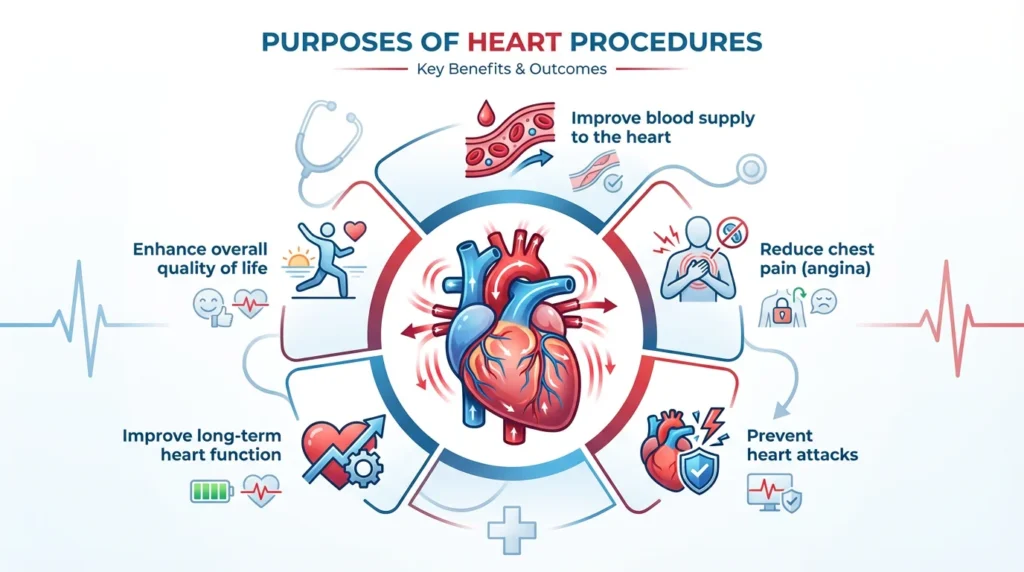
The result is direct: oxygen-rich blood reaches the heart muscle again, chest pain (angina) is relieved, and the long-term risk of a heart attack falls dramatically.
CABG is one of the most studied and successful operations in modern medicine, with decades of evidence behind it. For patients with multiple blockages or disease in the left main artery, bypass surgery often offers better long-term survival than stenting alone.
Who Needs Bypass Surgery?
Bypass surgery is usually recommended when:
- Multiple coronary arteries are severely blocked (typically 70% or more)
- The left main coronary artery is significantly narrowed
- Angioplasty or stenting is unlikely to be effective — long lesions, heavily calcified vessels, or diabetic patients with multi-vessel disease
- Angina (chest pain) continues despite optimal medication and previous stenting
- Heart function (ejection fraction) is reduced and bypass will improve survival

- Common warning signs that should prompt an evaluation include chest tightness or pressure on exertion, breathlessness, unusual fatigue, jaw or left-arm pain during effort, or symptoms returning after a previous stent. If you experience any of these, an early consultation can be life-saving.
Bypass Techniques Performed by Dr. Abhishek Parmar
Total Arterial CABG
Using only arterial grafts (LIMA, RIMA and radial artery). Arteries last significantly longer than vein grafts — 20-year patency rates are dramatically higher. This is the preferred approach for younger patients and anyone who wants the most durable, long-lasting result. Dr. Parmar is among the few surgeons in Gujarat performing total arterial bypass routinely.
LIMA-RIMA Y Graft
An advanced configuration in which the right internal mammary artery (RIMA) is joined to the left (LIMA) in a ‘Y’ shape, allowing both internal mammary arteries to feed multiple coronary territories from a single inflow. It is one of the most technically demanding and rewarding bypass techniques, and a particular area of Dr. Parmar’s expertise.
Off-Pump (Beating-Heart) Bypass
Surgery performed without stopping the heart and without the heart-lung (cardiopulmonary bypass) machine. This is particularly valuable for high-risk patients — those with kidney disease, prior stroke, or a heavily calcified aorta — where avoiding the bypass machine can improve outcomes and reduce complications.
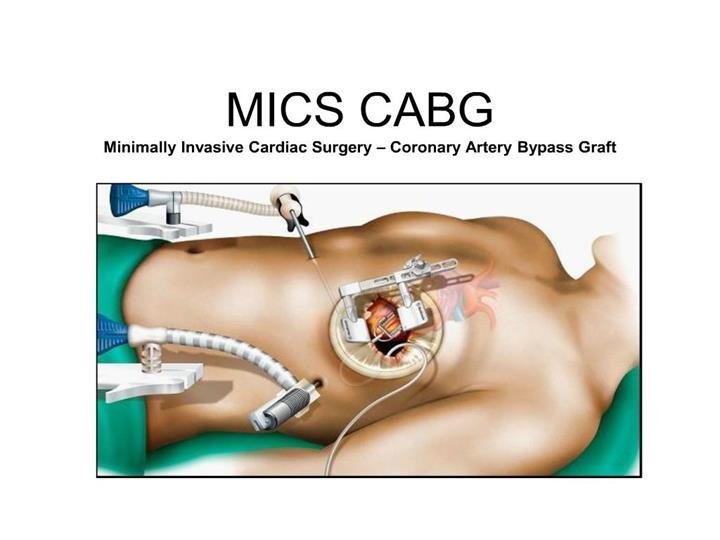
Minimally Invasive Direct CABG (MIDCAB)
For selected single-vessel disease, the bypass is performed through a small 3-inch incision on the left side of the chest, without splitting the breastbone. Recovery is dramatically faster, with less pain and minimal scarring. Dr. Parmar evaluates each patient carefully to determine whether MIDCAB is appropriate.
Your Bypass Journey: Step by Step

Recovery & Outcomes After CABG
Most patients walk on day 1 and climb stairs by day 3. Driving usually resumes at around 4 weeks, light work at 4–6 weeks, and full activity by 8–12 weeks. Cardiac rehabilitation — supervised exercise combined with lifestyle counselling — significantly improves long-term outcomes and is strongly recommended for every patient.
With Total Arterial CABG, roughly 90–95% of grafts remain open at 10 years and over 80% at 20 years, giving most patients decades of symptom-free life. Long-term medications, a heart-healthy diet, regular exercise and quitting smoking are equally important to protect the new grafts and the rest of the heart.
Know the Cost-
Heart Bypass Surgery Cost in Ahmedabad
Heart bypass surgery cost in Ahmedabad typically ranges between ₹2.5 lakh and ₹5 lakh. The final price depends on several factors:
- Surgical technique (off-pump, on-pump, MIDCAB, total arterial)
- Number of grafts and the complexity of the case
- Room category (general, private or suite)
- Length of hospital stay and number of ICU days
- Cardiac rehabilitation package
- Insurance coverage and cashless approvals
Most major insurance providers and corporate panels are accepted at HCG Hospitals, and cashless authorisations are usually processed within 24–48 hours. A detailed, personalised cost estimate is provided after your consultation, once the exact procedure has been planned.
Why Choose Dr. Abhishek Parmar for CABG?
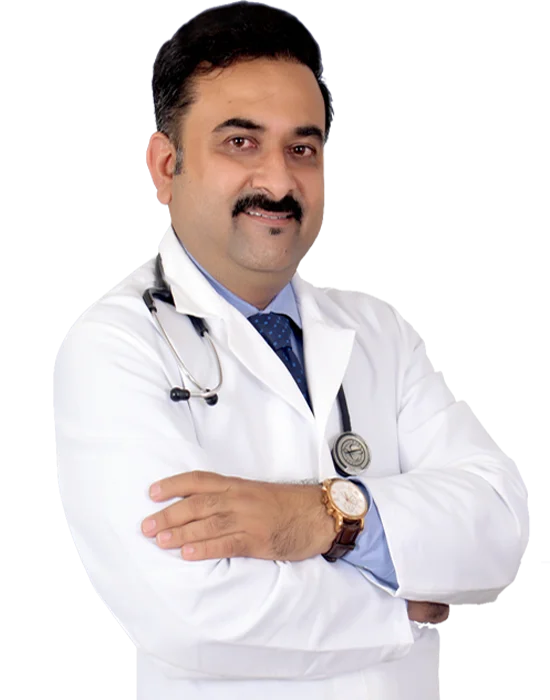
Dr. Abhishek Parmar is trusted by thousands of patients for his calm guidance, clear communication, and genuine concern for their well-being. He blends advanced surgical expertise with a human touch, helping patients feel confident and cared for at every step of their heart-health journey.
Frequently Asked Questions about CABG
20+ years of experience
11,000+ successful cardiac, thoracic, and vascular surgeries
20+ years of experience
11,000+ successful cardiac, thoracic, and vascular surgeries
Q. How long does bypass surgery take?
Most CABG procedures take 3 to 5 hours. Complex multi-vessel or re-do surgeries may take longer, while off-pump and MIDCAB times vary by case.
Q. Is bypass surgery painful?
The surgery itself is performed under general anaesthesia, so you feel nothing during the operation. Post-operative pain is well controlled with modern multi-modal pain relief; most patients describe it as moderate soreness rather than severe pain.
Q. How long will my bypass last?
With total arterial grafting, 80–90% of grafts remain functional at 20 years. Vein grafts have a shorter lifespan (around 50% at 10 years). Long-term medication and lifestyle changes strongly influence how long the benefits last.
Q. What is the difference between angioplasty and bypass surgery?
Angioplasty (stenting) opens a blocked artery from inside using a balloon and a metal stent. Bypass surgery creates a new pathway around the blockage using a graft. Bypass is generally preferred for left main disease, multi-vessel disease in diabetics, and complex calcified blockages.
Q. When can I return to work after bypass?
Office work typically resumes in 4–6 weeks; physically demanding jobs in 8–12 weeks. Cardiac rehabilitation helps you return safely and confidently.
Q. Is bypass surgery covered by insurance?
Yes — virtually all health insurance policies cover medically indicated CABG. Cashless authorisations at HCG Hospitals are usually approved within 24–48 hours.
Q. What is the success rate of bypass surgery?
CABG is one of the most successful operations in medicine, with success rates above 95% in experienced hands for elective cases. Individual risk depends on age, heart function and other health conditions, which Dr. Parmar assesses carefully before surgery.
Related Treatments
Heart Valve Surgery
Minimally Invasive Cardiac Surgery (MICS)
Total Arterial Bypass
Book Your Consultation
If you have been advised bypass surgery or are experiencing symptoms of coronary artery disease, book a consultation with Dr. Abhishek Parmar at HCG Hospitals, Ahmedabad. Outstation and international patients are welcome.