What Are the Chances of Having a Heart Attack After Bypass Surgery?
Introduction
Bypass surgery is one of the most effective treatments for blocked coronary arteries, but many patients worry about what comes after the operation. A common question that comes up during recovery is whether a heart attack can still happen even after the procedure. Understanding the real risk factors can help patients feel more informed and less anxious during their healing journey.
For patients looking for guidance on long term heart health after surgery, expert consultation and follow up support can help ensure a safe and steady recovery process.
Can a Heart Attack Still Happen After Bypass Surgery
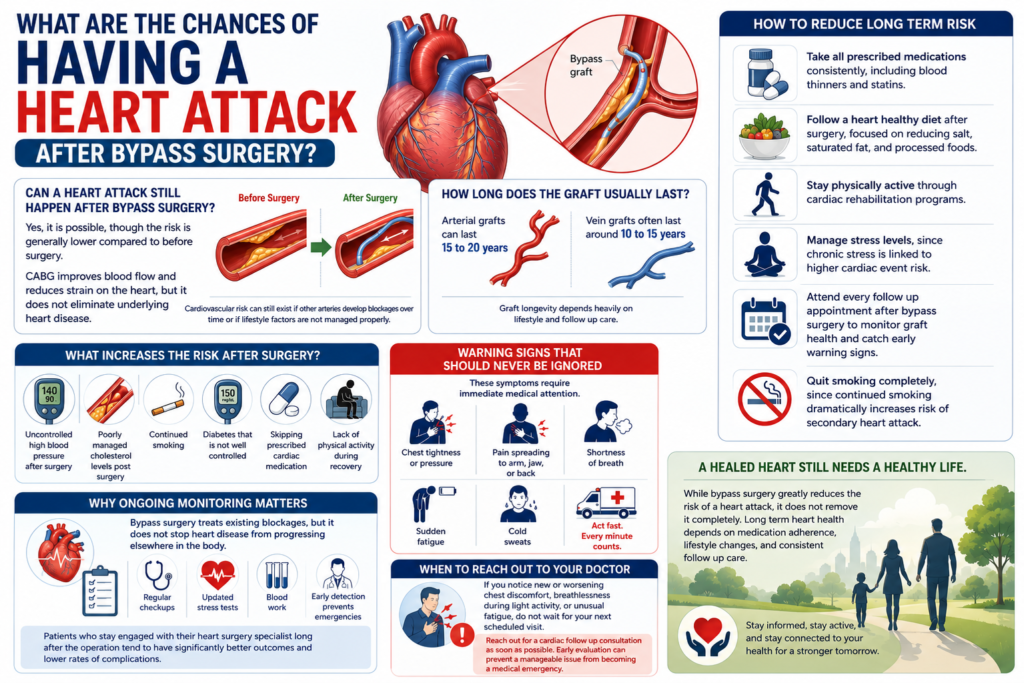
Yes, it is possible, though the risk is generally lower compared to before surgery. A coronary artery bypass graft, often called CABG, redirects blood flow around blocked arteries, reducing strain on the heart. However, it does not eliminate underlying heart disease. This means cardiovascular risk after bypass surgery can still exist if other arteries develop blockages over time or if lifestyle factors are not managed properly.
What Increases the Risk After Surgery
Several factors can raise the chances of a post bypass heart attack, including:
- Uncontrolled high blood pressure after surgery, which puts extra strain on the heart and graft vessels.
- Poorly managed cholesterol levels post surgery, which can lead to new blockages forming in untreated arteries.
- Continued smoking, which significantly increases risk of graft failure and future cardiac events.
- Diabetes that is not well controlled, since it affects blood vessel health and healing.
- Skipping prescribed cardiac medication after bypass surgery, especially blood thinners and cholesterol lowering drugs.
- Lack of physical activity during recovery, which affects overall function after surgery heart.
How Long Does the Graft Usually Last
Many patients ask how long a bypass graft lasts before it wears down. On average, arterial grafts can last 15 to 20 years, while vein grafts often last around 10 to 15 years, depending on lifestyle and follow up care. This is why graft longevity after bypass surgery depends heavily on ongoing heart healthy habits rather than the surgery alone.
Warning Signs That Should Never Be Ignored
Recognizing symptoms of a heart attack after bypass surgery early can save a life. These include chest tightness or pressure, pain spreading to the arm, jaw, or back, shortness of breath, sudden fatigue, and cold sweats. If any of these symptoms appear, immediate emergency cardiac care is necessary rather than waiting to see if they pass.
How to Reduce Long Term Risk
A strong post bypass recovery plan typically includes:
- Taking all prescribed medications consistently, including blood thinners and statins.
- Following a heart healthy diet after surgery, focused on reducing salt, saturated fat, and processed foods.
- Staying physically active through cardiac rehabilitation programs, which are proven to improve long term outcomes.
- Managing stress levels, since chronic stress is linked to higher cardiac event risk.
- Attending every follow up appointment after bypass surgery so your doctor can monitor graft health and catch early warning signs.
- Quitting smoking completely, since continued smoking dramatically increases risk of secondary heart attack.
Why Ongoing Monitoring Matters
Bypass surgery treats existing blockages, but it does not stop heart disease from progressing elsewhere in the body. This is why long term cardiac monitoring is just as important as the surgery itself. Regular checkups, updated stress tests, and blood work help doctors catch new issues before they become emergencies.
Patients who stay engaged with their heart surgery specialist long after the operation tend to have significantly better outcomes and lower rates of complications.
When to Reach Out to Your Doctor
If you notice new or worsening chest discomfort, breathlessness during light activity, or unusual fatigue, do not wait for your next scheduled visit. Reach out for a cardiac follow up consultation as soon as possible. Early evaluation can prevent a manageable issue from becoming a medical emergency.
A healed heart still needs a healthy life.
While bypass surgery greatly reduces the risk of a heart attack, it does not remove it completely. Long term heart health depends on medication adherence, lifestyle changes, and consistent follow up care. For patients seeking experienced guidance through recovery and beyond, working with a trusted specialist in Coronary Artery Bypass Surgery in Ahmedabad like Dr. Abhishek Parmar can provide the ongoing support needed for a safer, healthier future.