What Are the Signs of Complications After Heart Surgery?
Introduction
Every year, thousands of patients undergo cardiac procedures and go on to live full, healthy lives. But recovery is a process, not a single moment, and knowing what your body is telling you during that process can be the difference between a smooth healing journey and a medical emergency.
This guide breaks down the real warning signs worth watching for after heart surgery, based on patterns commonly seen in post surgical cardiac care. For patients seeking ongoing guidance during recovery, expert consultation and follow up support can help ensure a safe and steady healing process.
Recovery Is a Timeline, Not a Switch
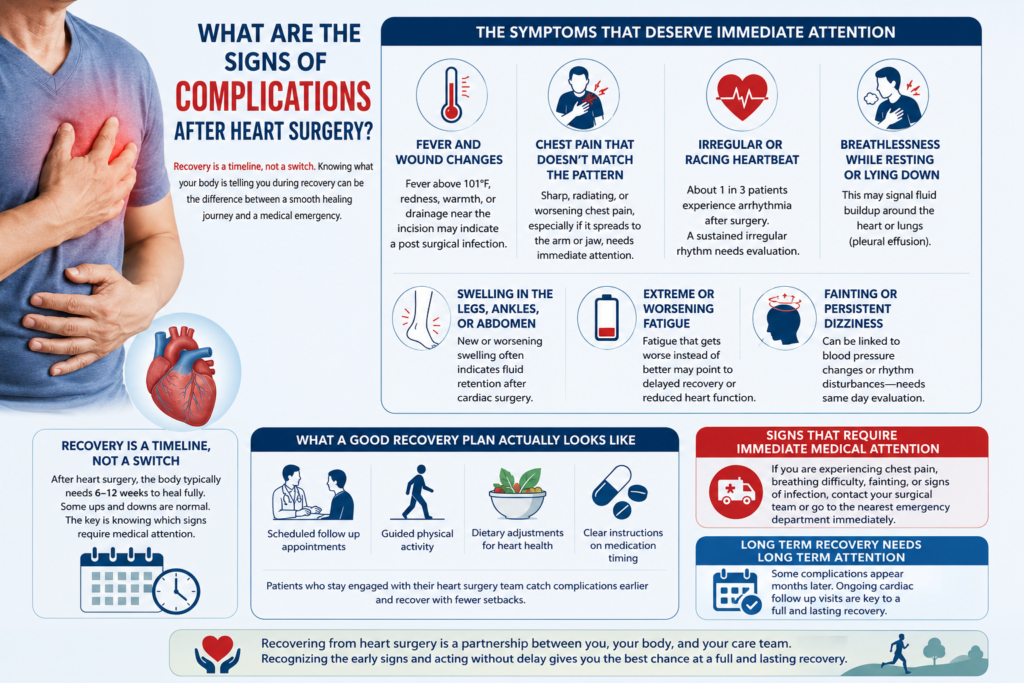
After open heart surgery, the body typically needs anywhere from six to twelve weeks to heal fully, sometimes longer depending on the procedure performed. During this window, patients often notice new sensations in their chest, changes in energy levels, or shifts in breathing. Most of this is expected. The goal isn’t to panic at every symptom, but to know which ones cross the line from normal healing into a cardiac surgery complication that needs medical attention.
The Symptoms That Deserve Immediate Attention
Fever and Wound Changes
A temperature above 101°F, along with redness, warmth, or drainage near the surgical incision site, often points to a post surgical infection. This is one of the most common complications and also one of the most treatable when caught early.
Chest Pain That Doesn't Match the Pattern
Mild soreness around the breastbone is normal. But sharp, radiating, or worsening chest pain after heart surgery, especially pain that spreads to the arm or jaw, should never be dismissed.
Irregular or Racing Heartbeat
Roughly one in three patients experience some form of arrhythmia after cardiac surgery in the first few weeks. Occasional flutters can be harmless, but a sustained irregular rhythm needs evaluation.
Breathlessness While Resting or Lying Down
This can signal fluid buildup around the heart or lungs, medically referred to as pleural effusion, and is one of the more serious signs that requires prompt imaging and treatment.
Swelling in the Legs, Ankles, or Abdomen
New or worsening swelling often reflects how well the heart is managing blood flow post surgery, a condition tied to fluid retention after cardiac surgery.
Extreme or Worsening Fatigue
Some tiredness is expected for weeks. But fatigue that gets worse instead of better may point to delayed cardiac recovery or reduced heart function.
Fainting or Persistent Dizziness
This can be linked to postoperative blood pressure changes or rhythm disturbances, both of which need same day evaluation.
What a Good Recovery Plan Actually Looks Like
Experienced cardiac teams don’t just treat the surgery, they manage the entire recovery arc. A well structured post cardiac surgery care plan typically includes scheduled follow up appointments after heart surgery, guided physical activity, dietary adjustments for heart health, and clear instructions on medication timing. Patients who stay engaged with their heart surgery specialist during this phase tend to catch complications earlier and recover with fewer setbacks.
Signs That Require Immediate Medical Attention
If you’re experiencing chest pain, breathing difficulty, fainting, or visible signs of infection, this is not a moment for a search engine. Contact your surgical team or go to the nearest emergency department. Understanding urgent post surgery symptoms is useful knowledge, but timing matters more than information when your body is signaling distress.
Long Term Recovery Needs Long Term Attention
Complications don’t always show up in week one. Some patients notice changes months later, which is why ongoing cardiac follow up consultation visits remain important well beyond the initial recovery period. Long term monitoring is often what separates a full recovery from a recurring issue.
Conclusion
Recovering from heart surgery is a partnership between the patient, their body, and their care team. Recognizing the early signs of complications after heart surgery, and acting on them without delay, gives patients the best chance at a full and lasting recovery. For those seeking experienced, attentive follow up care, working with a trusted Cardiac Surgeon in Ahmedabad like Dr. Abhishek Parmar offers continued support long after the operating room.