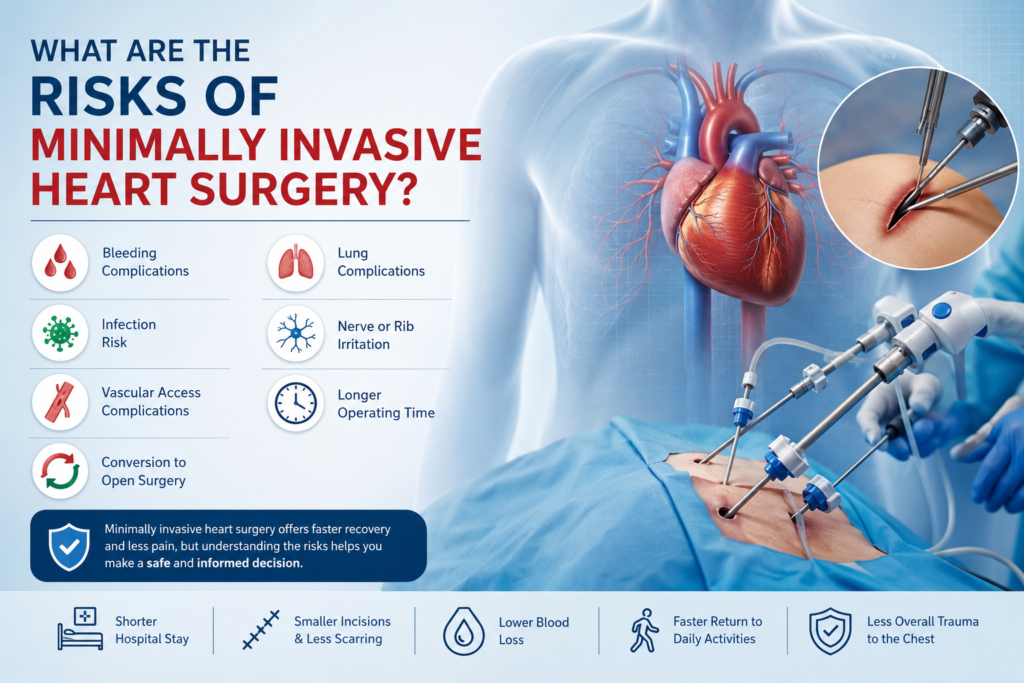
What Are the Risks of Minimally Invasive Heart Surgery?
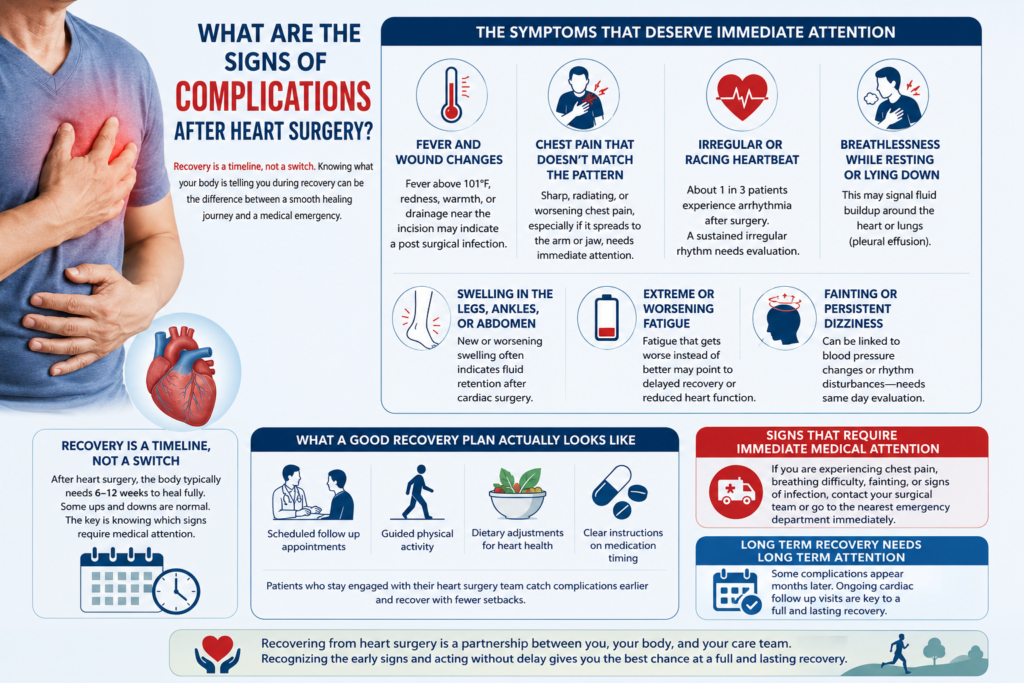
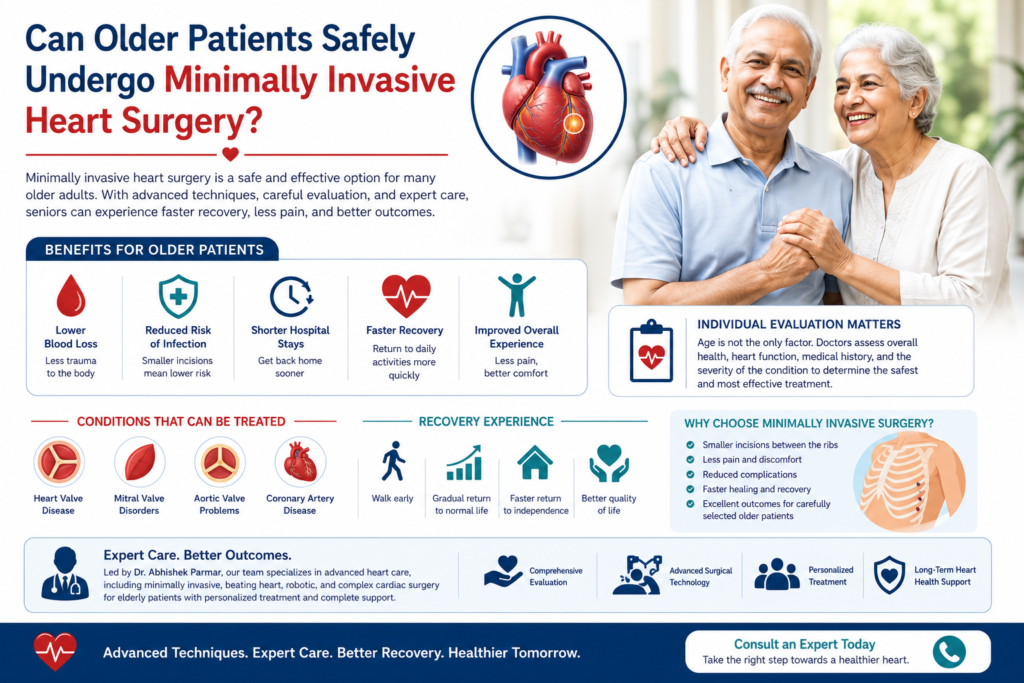
What Are the Risks of Minimally Invasive Heart Surgery? Introduction Minimally invasive heart surgery has become a popular alternative to traditional open heart procedures, offering smaller incisions, less pain, and faster recovery times. But like any surgical procedure, it comes with its own set of risks that patients should understand before making a decision.For patients researching their options, expert consultation and guidance can help them understand which surgical approach fits their specific heart condition. What Makes Heart Surgery “Minimally Invasive” Unlike traditional surgery that requires splitting the breastbone, minimally invasive cardiac procedures use small incisions between the ribs, often assisted by robotic tools or specialized instruments. This approach is commonly used for valve repair surgery, certain bypass procedures, and select congenital heart defect corrections. While the benefits are significant, understanding the potential surgical risks helps patients set realistic expectations. Common Risks Associated With the Procedure Bleeding Complications Even with smaller incisions, there is still a risk of internal bleeding after surgery, which may require monitoring or, in rare cases, a return to the operating room.Even with smaller incisions, there is still a risk of internal bleeding after surgery, which may require monitoring or, in rare cases, a return to the operating room. Infection Risk Though generally lower than open surgery, surgical site infection remains a possibility, especially if wound care instructions are not followed closely during recovery. Vascular Access Complications Since many minimally invasive procedures use blood vessels in the leg or groin for access, there is a risk of vascular injury during surgery, including bruising, clotting, or vessel damage. Conversion to Open Surgery In some cases, surgeons may need to switch to traditional open heart surgery midway through the procedure if complications arise or visibility becomes limited. This happens in a small percentage of cases but is an important risk to understand beforehand. Lung Complications Because one lung is sometimes partially deflated during the procedure to improve access, some patients experience temporary lung function issues or a higher chance of postoperative pneumonia.Even with smaller incisions, there is still a risk of internal bleeding after surgery, which may require monitoring or, in rare cases, a return to the operating room.Even with smaller incisions, there is still a risk of internal bleeding after surgery, which may require monitoring or, in rare cases, a return to the operating room. Nerve or Rib Irritation Since the surgery works between the ribs, some patients report chest wall discomfort or nerve related pain in the weeks following surgery. Longer Operating Time Minimally invasive techniques can sometimes take longer than traditional surgery due to the complexity of the instruments used, which may slightly increase anesthesia related risks for certain patients. Who Is a Good Candidate for This Procedure Not every patient qualifies for minimally invasive heart valve surgery or minimally invasive bypass surgery. Ideal candidates typically have healthy lung function, no severe calcification in the chest area, and a condition that does not require extensive repair. A thorough pre surgical evaluation helps determine whether this option is suitable or whether traditional surgery offers a safer path. Benefits That Still Make It a Strong Option Despite the risks, many patients choose this approach because of its clear advantages, including: Shorter hospital stays compared to traditional open heart surgery Reduced scarring and faster wound healing time Lower blood loss during the procedure Quicker return to daily activities through a smoother post surgery recovery timeline Less overall trauma to the chest wall How to Reduce Risk Before and After Surgery Patients can take steps to lower their chances of complications by following a proper pre operative care plan, including managing blood pressure, quitting smoking, and treating any existing infections beforehand. After surgery, sticking closely to post operative instructions, attending all follow up appointments, and reporting unusual symptoms early can significantly reduce risk. When to Contact Your Surgeon If you experience fever, unusual swelling, breathing difficulty, or chest pain that worsens instead of improves, contact your care team immediately. Early medical evaluation after cardiac surgery often prevents small issues from becoming serious complications. Choosing the Right Surgical Team Because minimally invasive techniques require specialized training, choosing a surgeon experienced specifically in these methods matters. A skilled cardiac surgical specialist will walk you through your individual risk assessment, explain alternatives, and help you make an informed decision based on your specific heart condition. Because every heartbeat deserves expert care. Minimally invasive heart surgery offers real advantages, but it is not risk free. Understanding potential complications, from bleeding to conversion risks, helps patients approach the decision with clear expectations and confidence. For those exploring safer, less invasive options for their heart condition, consulting a specialist in Minimally Invasive Cardiac Surgery in Ahmedabad like Dr. Abhishek Parmar can help determine the safest and most effective path forward. To learn more or schedule a consultation, visit drabhishekparmar.com.